
Catalog activity ranking
Most-Played Yu-Gi-Oh! Games in the EmuGamers Catalog
This page uses active Yu-Gi-Oh! catalog entries and separates popularity signals from compatibility evidence. This activity ranking links directly to 6 catalog entries in the Yu-Gi-Oh! collection.
What is the quick answer?
Yu-Gi-Oh! Duel Monsters 4: Battle of Great Duelist - Jounouchi Deck currently appears first in this activity ranking, followed by Yu-Gi-Oh! Monster Capsule GB and Yu-Gi-Oh! Duel Monsters III: Tri-Holy God Advent. Games with real community ratings are considered first; entries without votes are ordered by play activity. This is a catalog signal, not an independent editorial review.
Most-played Yu-Gi-Oh! games
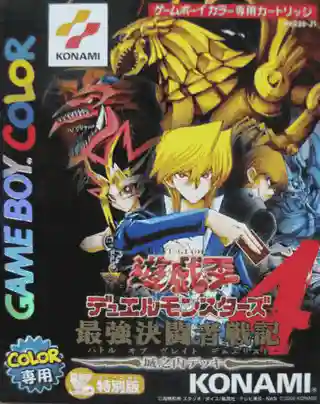
Yu-Gi-Oh! Duel Monsters 4: Battle of Great Duelist - Jounouchi Deck
Game BoyDigital card game
Yu-Gi-Oh! Duel Monsters 4: Battle of Great Duelist - Jounouchi Deck is a Japanese Game Boy digital card game developed by Konami Computer Entertainment Japan and published by Konami. It adapts the early Duel Monsters rules and gives the player a card pool and starting deck associated with Jounouchi Katsuya. The main premise is to defeat rival duelists, win cards, and improve the deck for harder matches. Play is menu-driven and turn-based, with battles presented through compact Game Boy graphics. The three Duel Monsters 4 versions were designed to complement one another through different featured decks and cards. Reception was primarily shaped by its role as a collectible Yu-Gi-Oh! release rather than by a large story campaign.
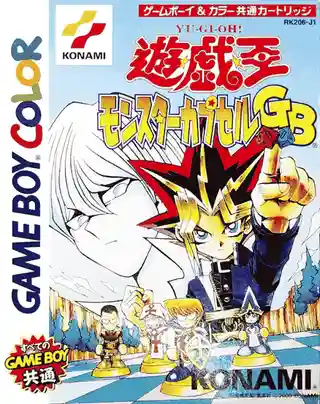
Yu-Gi-Oh! Monster Capsule GB
Game BoyStrategy
Yu-Gi-Oh! Monster Capsule GB is a Japanese Game Boy strategy game developed by Konami Computer Entertainment Japan and published by Konami. Rather than reproducing the series’ usual card-dueling format, it adapts the Monster Capsule concept into a turn-based board battle. Players deploy capsule monsters, move them across compact battlefields, and defeat opposing units through positioning and combat. A story-driven campaign provides the main structure, with battles gradually introducing stronger monsters and more demanding maps. Its play style is slower and more tactical than many other Yu-Gi-Oh! games on the platform. Reception has generally focused on its unusual rules and faithful monster presentation, while noting that its Japanese-only release and specialized mechanics limit its accessibility for players unfamiliar with the source material.
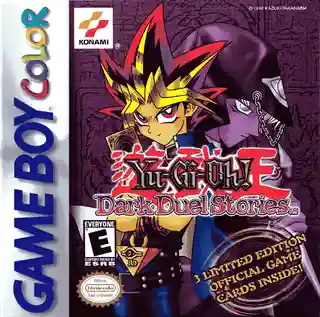
Yu-Gi-Oh! Duel Monsters III: Tri-Holy God Advent
Game BoyTrading card game
Yu-Gi-Oh! Duel Monsters III: Tri-Holy God Advent is a Japanese Game Boy Color trading card game developed by Konami Computer Entertainment Japan and published by Konami. It adapts the Duel Monsters rules and centers on collecting cards, building a deck, and challenging rival duelists. The game combines menu-driven card battles with progression through an adventure-style structure, while its main attraction is the inclusion of the three Egyptian God cards. It was released during the early expansion of the Yu-Gi-Oh! video-game line in Japan. Reception was generally shaped by its large card roster and its appeal to fans of the television and manga characters, although the interface and rule implementation can feel opaque to players unfamiliar with the series.
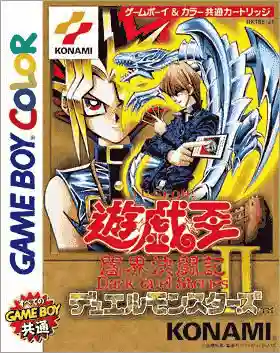
Yu-Gi-Oh! Duel Monsters II: Dark Duel Stories
Game BoyCollectible card game
Yu-Gi-Oh! Duel Monsters II: Dark Duel Stories is a turn-based collectible card game developed by Konami Computer Entertainment Japan and published by Konami for Game Boy. Players build a deck from monster, magic, and trap cards, then challenge duelists from the Yu-Gi-Oh! anime and manga setting. Battles use simplified rules inspired by the early trading card game, with summoning conditions, attribute matchups, and life-point management shaping each turn. The game combines a campaign of progressively stronger opponents with deck construction and card collection. Its reception was primarily tied to the appeal of Yu-Gi-Oh! during the franchise’s early video-game boom; critics and players generally recognized its large card roster while noting its simplified rules and limited presentation.
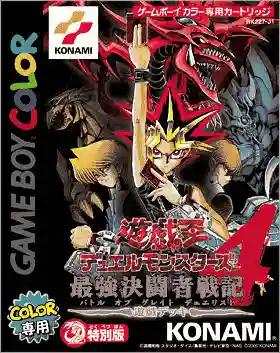
Yu-Gi-Oh! Duel Monsters 4: Battle of Great Duelist - Yugi Deck
Game BoyCard Battle
Yu-Gi-Oh! Duel Monsters 4: Battle of Great Duelist - Yugi Deck is a turn-based card-battling game developed by Konami Computer Entertainment Japan and published by Konami for the Game Boy Color. It is one of three version-specific releases built around different starter card pools and duelists, with this edition centered on Yugi’s deck. Players assemble and improve a deck, summon monsters, use spells and traps, and challenge opponents under the series’ Duel Monsters rules. The game was released in Japan in 2000 and was notable for its connection to the Yu-Gi-Oh! card game and anime. Its separate-version structure gives the three editions different cards and progression paths.
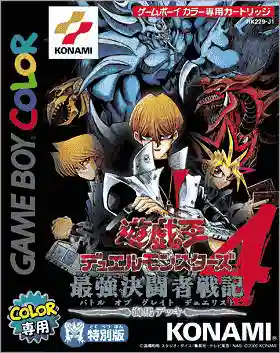
Yu-Gi-Oh! Duel Monsters 4: Battle of Great Duelist - Kaiba Deck
Game BoyCollectible card game
Yu-Gi-Oh! Duel Monsters 4: Battle of Great Duelist - Kaiba Deck is a turn-based collectible card game developed by Konami Computer Entertainment Japan for the Game Boy Color. It presents digital versions of the early Yu-Gi-Oh! trading card game rules, with Seto Kaiba as the central theme and a Kaiba-focused card selection. Players duel computer-controlled opponents, improve their deck, and work through a structured series of battles. The game was released in Japan in 2000 as one of three linked Duel Monsters 4 versions, each associated with a different character. Reception was shaped by its large card roster and link features, although its simplified rules and version-exclusive content limited its appeal outside the Japanese market.
How is this list kept current?
How rankings are calculated
The list is generated from active EmuGamers catalog entries. Votes and play activity determine order; browser compatibility is reported separately and does not turn an untested game into a higher-ranked recommendation.
| Order | Signal | How it is used |
|---|---|---|
| 1 | Real community votes | Games with at least one recorded vote appear before games with no votes. |
| 2 | Rating confidence | More votes rank first, followed by the rating value. |
| 3 | Play activity | Play count breaks rating ties and orders entries with no votes. |
| 4 | Stable tie-break | Game name keeps otherwise equal results deterministic. |
Which sources support further research?
Official sources and catalog provenance
The ranked games come from the EmuGamers database. The links below are related official project updates used for emulator support and preservation context; they are not citations for the ranking order.