
Raamo
The young protagonist, who explores the Green-sky communities and investigates the problems affecting them.
How it plays
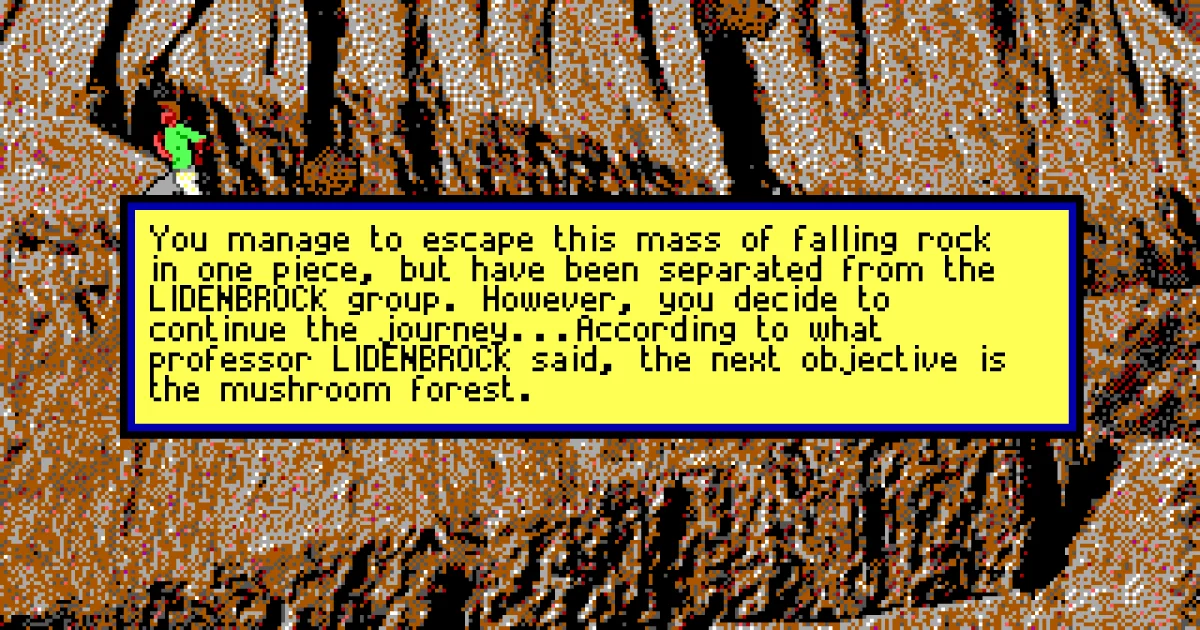
The game presents a side-scrolling view of the Green-sky world. Raamo travels through connected underground areas, climbs roots, enters homes, and speaks with inhabitants while investigating threats to the community. Exploration and dialogue are central, and the game does not use conventional combat as its main challenge.
Progress comes from finding locations, learning information from characters, using available abilities, and solving environmental or conversational problems. The world is structured as a sequence of areas rather than as a score-focused arcade course. Careful observation is important because useful clues may be given indirectly.
Plan your run
Talk to characters more than once and pay attention to what they reveal about places, customs, and ongoing problems.
Explore methodically. Record unfamiliar names and locations, and revisit areas after gaining new information or abilities.
The game rewards patience rather than speed. When progress stops, inspect nearby rooms and reconsider earlier conversations before assuming that a new route is required.
Meet the cast
The young protagonist, who explores the Green-sky communities and investigates the problems affecting them.
Before you begin
Keep notes on characters, locations, and clues.
Revisit previously explored areas after important conversations.
Treat dialogue as a primary source of progression.
Below the Root is a literary adventure game developed and published by Windham Classics for DOS in 1984, based on Zilpha Keatley Snyder's Green-sky novels. The player explores a peaceful subterranean society where communities live among enormous roots and communicate through unusual mental and social abilities. Instead of focusing on combat, the game emphasizes observation, conversation, navigation, and puzzle solving. Its side-scrolling presentation is combined with text-driven interactions and a deliberately contemplative pace. The game was notable for adapting a children's science-fiction setting into an ambitious computer experience, with themes of ecology, cooperation, and cultural misunderstanding. Contemporary and later discussion has generally recognized its originality and atmosphere, while also noting that its objectives and interface can be obscure. It remains a distinctive example of early literary and educational game design.
Catalog entry maintained by EmuGamers Editorial Team
Community discussion
What are players saying? 0