
Juste Belmont
The playable vampire hunter and grandson of Simon Belmont. He uses the legendary whip and magical abilities to search the castle.
Documented for this version
D-pad | Move, crouch, and navigate menus |
|---|---|
A | Jump |
B | Attack with the equipped weapon |
Button functions can vary when menus or special equipment are active.
How it plays
Players guide Juste through interconnected rooms from a side-scrolling perspective. The main objectives are to explore both castle versions, defeat bosses, collect keys and relics, rescue Lydie, and uncover the relationship between Maxim and Dracula.
Juste attacks with a whip and can use sub-weapons, spell books, equipment, and relics. New abilities open previously inaccessible routes, while weapons, armor, accessories, and healing items support character progression. The game also includes a second playable character, Maxim, after the relevant conditions are met.
Plan your run
Explore methodically and revisit rooms after obtaining movement relics; many blocked routes are designed to be cleared later.
Meet the cast
The playable vampire hunter and grandson of Simon Belmont. He uses the legendary whip and magical abilities to search the castle.
Juste’s childhood friend, whose disappearance and altered behavior drive the story.
Juste and Maxim’s close friend, who is held inside the castle.
The recurring vampire lord whose power and legacy influence the castle’s events.
Dracula’s powerful servant and a recurring supernatural antagonist.
Before you begin
Check the map for unexplored rooms and suspicious dead ends.
Keep several healing items available before boss encounters.
Experiment with spell combinations rather than relying only on the whip.
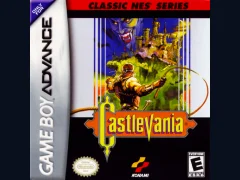
Castlevania: Harmony of Dissonance is a side-scrolling action-adventure game developed by Konami Computer Entertainment Tokyo for the Game Boy Advance. It follows Juste Belmont, a descendant of the Belmont vampire-hunting clan, as he searches for his kidnapped friend Maxim and explores a mysterious castle. The game combines platforming, melee combat, exploration, equipment management, and light role-playing mechanics. Its central structure uses two connected castle versions with overlapping layouts and different routes. Released in 2002, it was recognized for its large map, responsive controls, and substantial exploration, while its bright visual style and audio presentation received more mixed reactions than those of some other Castlevania games.
Catalog entry maintained by EmuGamers Editorial Team

Community discussion
What are players saying? 0