
Michel
A window cleaner who becomes involved in a dangerous journey through time and serves as the player character.
How it plays
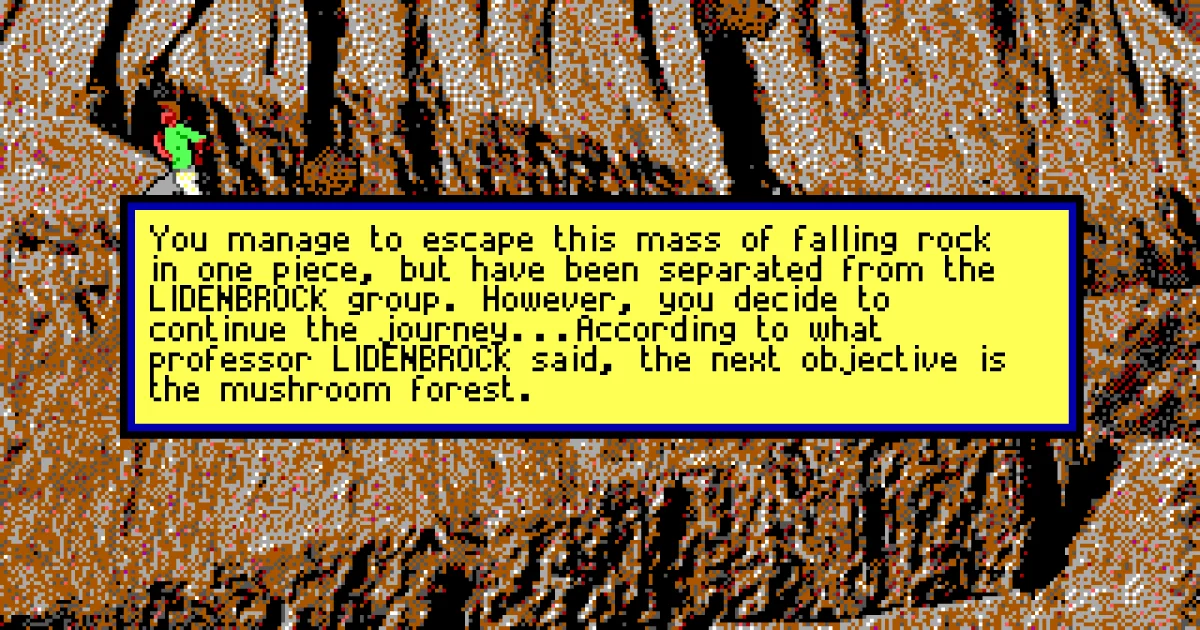
The game is presented as a two-dimensional graphic adventure viewed from fixed side-on and room-based scenes. Michel explores locations, examines objects, collects items, and uses verbs and inventory objects to solve environmental puzzles.
Progression follows a linear chain of scenes and story events. The player must identify useful objects, combine or apply them in the correct context, and sometimes survive dangerous situations through careful timing or experimentation. There is no combat-focused character system, open-world structure, or character-level progression.
Plan your run
Examine every visible object and speak with available characters before leaving an area. Keep notes about unusual locations, warnings, and objects that appear connected to the time-travel plot.
Use inventory items deliberately and revisit earlier areas when a new story event changes what is possible. Save often before trying an unfamiliar action, since some scenes can punish experimentation.
Meet the cast
A window cleaner who becomes involved in a dangerous journey through time and serves as the player character.
Before you begin
Inspect scenes carefully; important interactive objects can blend into the background.
Keep multiple saves before entering unfamiliar locations or using an item.
Expect some puzzles to require trying an item on several plausible targets.
Future Wars: Adventures in Time is a science-fiction graphic adventure developed by Delphine Software and released for DOS in 1989. The player follows Michel, an ordinary window cleaner whose routine changes after he discovers a device capable of opening paths through time. The story moves between recognizable historical settings and a distant future threatened by conflict, combining exploration, environmental puzzles, and a cinematic narrative. Delphine’s rotoscoped visual style gives the game unusually fluid character animation for its period, while its interface follows the command-driven adventure conventions common on home computers. Contemporary and later reception has generally recognized its atmosphere, presentation, and ambition, although the puzzle design and occasional trial-and-error sequences can be demanding.
Catalog entry maintained by EmuGamers Editorial Team
Community discussion
What are players saying? 0