
The astronaut
The unnamed player character, sent into space and drawn into the mystery of the alien object.
Documented for this version
Enter | Submit the typed text command. Commands are entered through the keyboard; the game is text-based. |
|---|
Movement and interactions are performed with typed commands rather than directional controls.
How it plays
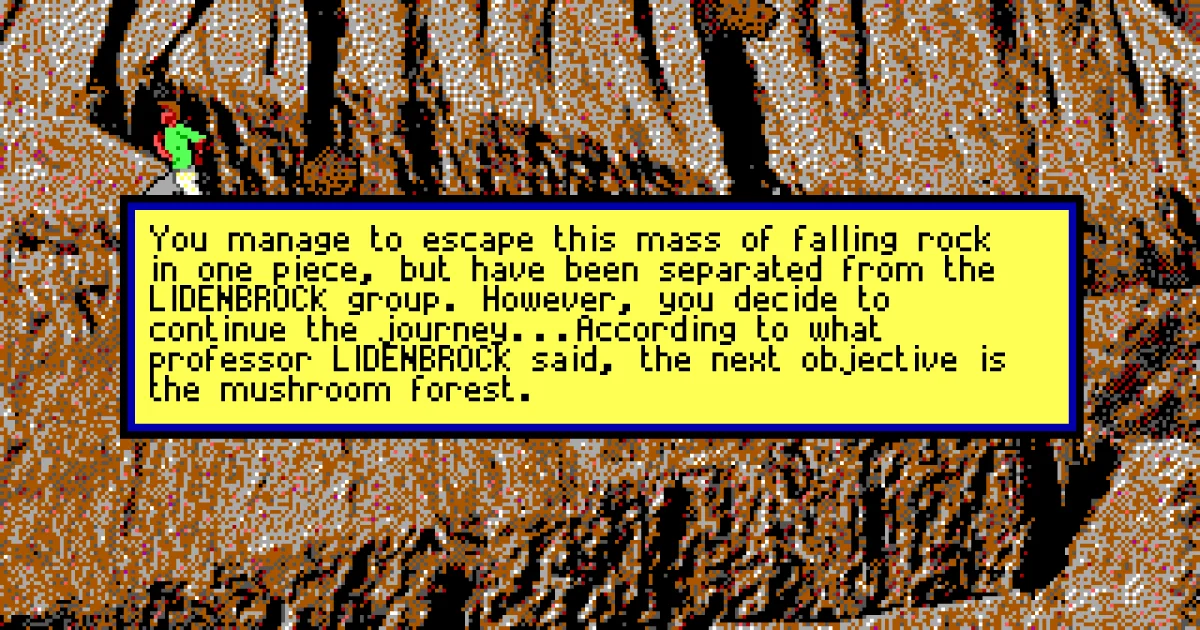
Starcross is viewed through descriptive text. The player explores rooms and locations inside and around an alien structure, reads the results of each action, and works toward understanding the environment and completing the mission.
Commands typically involve movement, observation, communication, object manipulation, and inventory management. Puzzles require combining clues, using objects in the correct places, and revisiting areas as new information becomes available. There are no conventional action stages or selectable difficulty modes; progression is governed by discoveries and successful command sequences.
Plan your run
Read every room description carefully and record unusual details, exits, objects, and apparent contradictions.
Meet the cast
The unnamed player character, sent into space and drawn into the mystery of the alien object.
Mysterious nonhuman entities connected with the object and the events the astronaut investigates.
Before you begin
Use short, conventional commands and inspect the result after every important action.
Map the environment as you explore; spatial relationships are often part of the puzzles.
If a situation seems impossible, look for an overlooked object, description, or alternate interpretation.
Starcross is a science-fiction interactive fiction adventure developed and published by Infocom for DOS in 1982. The player is an astronaut whose mission changes after encountering a vast alien object in space. Progress depends on reading detailed prose, examining surroundings, solving spatial and logical problems, and entering natural-language commands rather than controlling an on-screen avatar. The game is presented entirely through text, with exploration shaped by clues, inventory use, and experimentation. Its parser and demanding puzzles reflect Infocom’s early design style. Starcross was well regarded for its atmosphere, technical presentation, and ambitious science-fiction setting, although its difficulty can make progress obscure without careful note-taking.
Catalog entry maintained by EmuGamers Editorial Team
Community discussion
What are players saying? 0