
Catalog activity ranking
Most-Played Kunio-kun series Games in the EmuGamers Catalog
This page uses active Kunio-kun series catalog entries and separates popularity signals from compatibility evidence. This activity ranking links directly to 6 catalog entries in the Kunio-kun series collection.
What is the quick answer?
Crash 'n the Boys: Street Challenge currently appears first in this activity ranking, followed by Super Dodge Ball and Downtown Nekketsu Koushin Kyoku: Soreyuke Daiundoukai. Games with real community ratings are considered first; entries without votes are ordered by play activity. This is a catalog signal, not an independent editorial review.
Most-played Kunio-kun series games
Crash 'n the Boys: Street Challenge
Nintendo Entertainment System (NES)Sports
Crash 'n the Boys: Street Challenge is a competitive sports-action game developed by Technōs Japan and released for the Nintendo Entertainment System in 1992. It adapts the rowdy schoolyard spirit of the Kunio-kun games into a series of violent, obstacle-filled athletic events rather than a conventional sports simulation. Players compete in events such as obstacle racing, swimming, hammer throwing, and rooftop challenges. Success depends on timing, stamina, attacks, and smart use of the environment. Its unusual rules, cartoon violence, and multiplayer focus made it a distinctive NES title, although its appeal is strongest with friends and its controls can take time to learn.

Super Dodge Ball
Nintendo Entertainment System (NES)Sports
Super Dodge Ball is a sports-action game developed by Technōs Japan for the Nintendo Entertainment System. It presents dodgeball as a fast arcade contest rather than a strict simulation, with teams attacking one another using punches, kicks, throws, and special ball techniques. The player controls Kunio and competes against international teams across a short tournament-style progression. Its colorful sprites, forceful collisions, and energetic pace reflect Technōs Japan's beat-'em-up design. The NES release became a recognizable cult favorite, especially among players who enjoyed the Kunio-kun character style and unusual take on a familiar schoolyard sport.
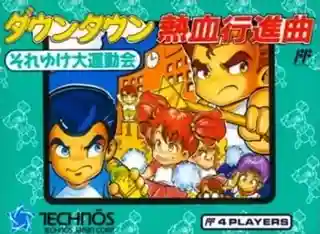
Downtown Nekketsu Koushin Kyoku: Soreyuke Daiundoukai
Nintendo Entertainment System (NES)Sports
Downtown Nekketsu Koushinkyoku: Soreyuke Daiundoukai is a 1990 NES action-sports game developed and published by Technōs Japan. It places Kunio and other characters from the Kunio-kun series in a rough-and-tumble school athletics competition rather than a conventional track-and-field simulation. Players compete across several events that combine racing, obstacle navigation, jumping, grabbing, and direct attacks. The game supports competitive play as well as solo participation, with success depending on both movement skill and effective use of attacks. It was well received in Japan for translating the series’ comic brawling style into a chaotic multiplayer sports format, although its Japanese-only release limited its international visibility.
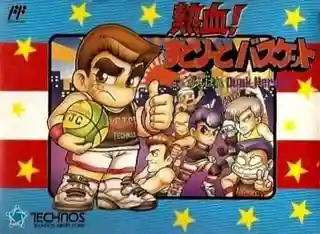
Nekketsu! Street Basket: Ganbare Dunk Heroes
Nintendo Entertainment System (NES)Sports
Nekketsu! Street Basket: Ganbare Dunk Heroes is an arcade-style basketball game developed and published by Technōs Japan for the Nintendo Entertainment System. It presents street basketball as a rough, energetic contest rather than a strict simulation, with exaggerated physical play, unusual courts, and spectacular attacks. Players select a team and compete in matches where scoring, stealing, blocking, and disrupting opponents are equally important. The game belongs to the broader Kunio-kun tradition of comic action sports. Its colorful presentation and deliberately chaotic rules earned it a distinctive reputation among Japanese NES players, although its regional availability was limited and it never received an official Western release.
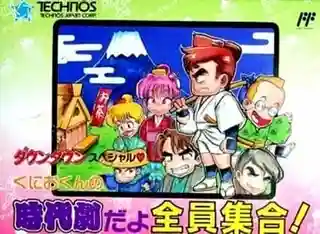
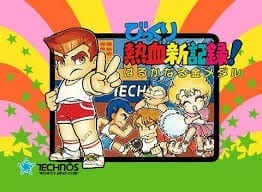
Downtown Special: Kunio-kun's Historical Period Drama! Everyone Gather!
Nintendo Entertainment System (NES)Beat 'em up
Downtown Special: Kunio-kun's Historical Period Drama! Everyone Gather! is a Japanese side-scrolling beat 'em up with action-RPG elements, developed and published by Technōs Japan for the Nintendo Entertainment System in 1991. It recasts Kunio-kun characters as brawlers in a comic Edo-period adventure, with Kunimasa traveling through feudal Japan and taking on gangs, outlaws, and rival fighters. Battles combine punches, kicks, throws, jumping attacks, and learned special techniques. A world map, shops, equipment, money, and character growth give the campaign more structure than a straightforward arcade beat 'em up. The game was well regarded in Japan for its humor, generous content, and inventive customization, although its Japanese-only release limited recognition outside Japan.
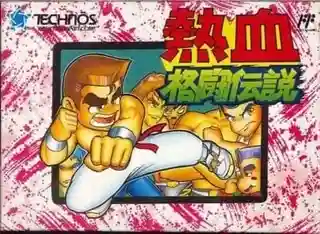
Nekketsu Fighting Legend
Nintendo Entertainment System (NES)Fighting
Nekketsu Fighting Legend is a 1992 Technōs Japan fighting game for the Nintendo Famicom, commonly grouped with the Kunio-kun series. It presents Kunio and rival characters in compact arena battles built around punches, kicks, throws, jumping attacks, and direct clashes at close range. The game emphasizes straightforward competitive play rather than elaborate special-move systems. Players select fighters and fight through battles while learning each character’s reach, speed, and attack timing. Its colorful sprites and humorous Kunio-kun presentation were well received by fans of Technōs Japan’s action games, although its release remained limited to Japan and it never became as internationally prominent as the company’s better-known beat ’em ups.
How is this list kept current?
How rankings are calculated
The list is generated from active EmuGamers catalog entries. Votes and play activity determine order; browser compatibility is reported separately and does not turn an untested game into a higher-ranked recommendation.
| Order | Signal | How it is used |
|---|---|---|
| 1 | Real community votes | Games with at least one recorded vote appear before games with no votes. |
| 2 | Rating confidence | More votes rank first, followed by the rating value. |
| 3 | Play activity | Play count breaks rating ties and orders entries with no votes. |
| 4 | Stable tie-break | Game name keeps otherwise equal results deterministic. |
Which sources support further research?
Official sources and catalog provenance
The ranked games come from the EmuGamers database. The links below are related official project updates used for emulator support and preservation context; they are not citations for the ranking order.