
Catalog activity ranking
Most-Played Barbie Games in the EmuGamers Catalog
This page uses active Barbie catalog entries and separates popularity signals from compatibility evidence. This activity ranking links directly to 3 catalog entries in the Barbie collection.
What is the quick answer?
Barbie Vacation Adventure currently appears first in this activity ranking, followed by Barbie and the Magic of Pegasus and Barbie: The Princess and the Pauper. Games with real community ratings are considered first; entries without votes are ordered by play activity. This is a catalog signal, not an independent editorial review.
Most-played Barbie games
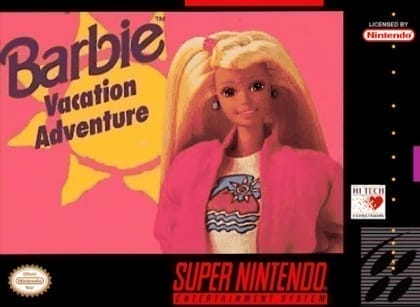
Barbie Vacation Adventure
Super Nintendo (SNES)Adventure
Barbie Vacation Adventure is a 1994 Super Nintendo adventure and educational game published by Hi-Tech Expressions. It presents Barbie traveling through vacation-themed activities rather than following a conventional action-game campaign. The experience is designed around exploration, simple interaction, and a collection of recreational challenges suitable for younger players. Its play style alternates between visiting destinations, selecting activities, and completing straightforward objectives. The game emphasizes colorful presentation and accessible controls over complex combat or advanced puzzles. Reception has generally been limited and mixed, with its appeal depending heavily on interest in Barbie and its relaxed, child-oriented format. It is now chiefly of interest as one of the licensed Barbie games released for 16-bit consoles.
Barbie and the Magic of Pegasus
Game Boy AdvanceAction
Barbie and the Magic of Pegasus is a side-scrolling action-platform game developed by Neko Entertainment and published by Vivendi Universal Games for the Game Boy Advance. It adapts the 2005 animated film, casting Barbie as Princess Annika, who must restore her kingdom after the sorcerer Wenlock turns its people to stone. Players guide Annika through colorful fantasy environments, jumping across platforms, avoiding hazards, collecting items, and using magical abilities against enemies. The game is aimed at a younger audience and emphasizes straightforward exploration over complex combat. Its reception was generally modest: reviewers recognized the colorful presentation and accessible design, while criticizing its short length and limited depth compared with larger action games.
Barbie: The Princess and the Pauper
Game Boy AdvanceAction-Adventure
Barbie: The Princess and the Pauper is a 2004 Game Boy Advance action-adventure platformer based on the animated film of the same name. Developed and published by Vivendi Universal Games, it follows Princess Anneliese and Erika, a village girl who resembles her, as they become involved in a royal conspiracy. The game presents a side-scrolling adventure with exploration, obstacle courses, simple enemies, and collectible-focused objectives. Players control the two heroines through stages inspired by the film, with each character contributing to the journey. Its appeal is aimed primarily at younger players and fans of Barbie. Reception was generally modest, with praise focused on its recognizable license and accessible design rather than technical ambition.
How is this list kept current?
How rankings are calculated
The list is generated from active EmuGamers catalog entries. Votes and play activity determine order; browser compatibility is reported separately and does not turn an untested game into a higher-ranked recommendation.
| Order | Signal | How it is used |
|---|---|---|
| 1 | Real community votes | Games with at least one recorded vote appear before games with no votes. |
| 2 | Rating confidence | More votes rank first, followed by the rating value. |
| 3 | Play activity | Play count breaks rating ties and orders entries with no votes. |
| 4 | Stable tie-break | Game name keeps otherwise equal results deterministic. |
Which sources support further research?
Official sources and catalog provenance
The ranked games come from the EmuGamers database. The links below are related official project updates used for emulator support and preservation context; they are not citations for the ranking order.