
Catalog activity ranking
Most-Played Sesame Street Games in the EmuGamers Catalog
This page uses active Sesame Street catalog entries and separates popularity signals from compatibility evidence. This activity ranking links directly to 7 catalog entries in the Sesame Street collection.
What is the quick answer?
The Sesame Street Crayon: Letters For You currently appears first in this activity ranking, followed by Elmo's Letter Adventure and Ernie's Magic Shapes. Games with real community ratings are considered first; entries without votes are ordered by play activity. This is a catalog signal, not an independent editorial review.
Most-played Sesame Street games
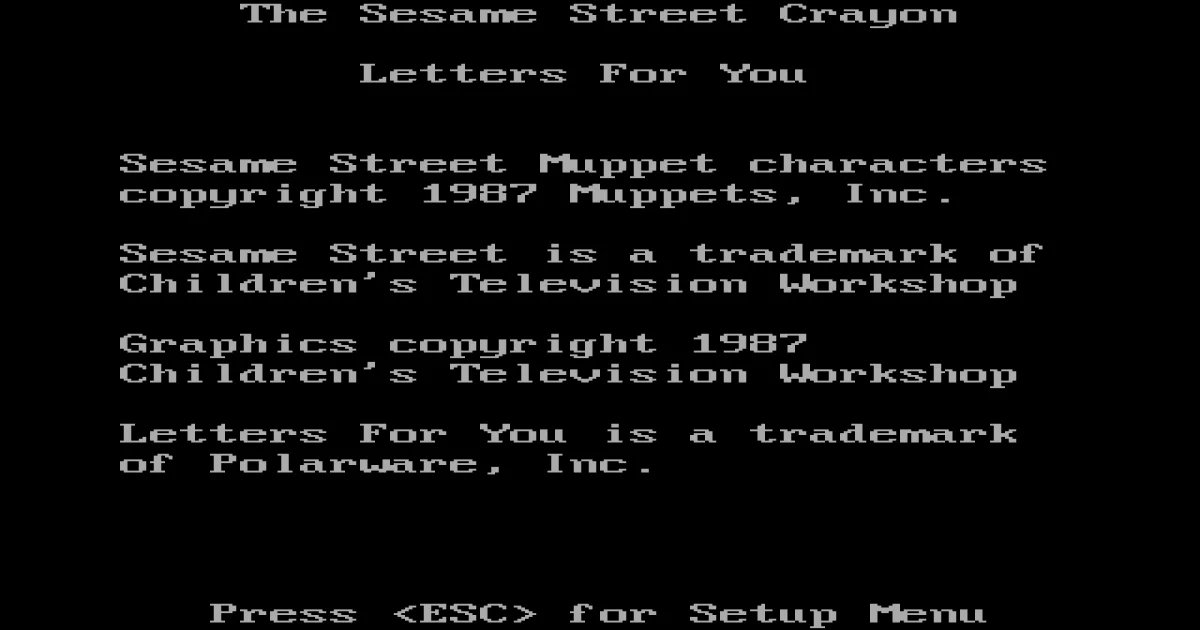
The Sesame Street Crayon: Letters For You
DOSEducational
The Sesame Street Crayon: Letters For You is an educational children's game for DOS, published by Creative Wonders. It uses Sesame Street characters and familiar preschool activities to introduce early letter recognition and related language skills. The play style is designed for young children rather than experienced computer players, with simple interactions and a bright, character-led presentation. The game belongs to the wave of licensed educational software that brought television properties into the home. Its historical reception is best understood as family-oriented edutainment: its appeal comes from the Sesame Street setting and accessible learning activities, while its limited challenge and child-focused scope make it less suitable for older players.
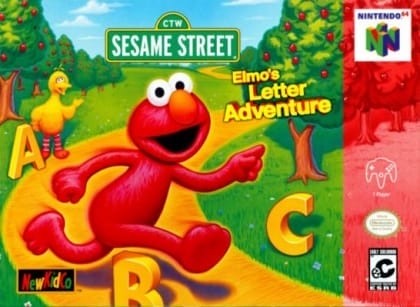
Elmo's Letter Adventure
Nintendo 64Educational
Elmo's Letter Adventure is an educational platform-adventure game developed by Realtime Associates and published by NewKidCo for the Nintendo 64. It places Elmo in colorful 3D environments where young players search for letters, identify their sounds, and complete simple activities built around early literacy. The game uses gentle exploration rather than difficult combat, with short objectives and cheerful Sesame Street presentation. Its intended audience is preschool and early-school children, and its reception has generally been described as suitable for that audience while offering limited challenge for older players. The Nintendo 64 release is notable as one of several Sesame Street games designed specifically for early learning.
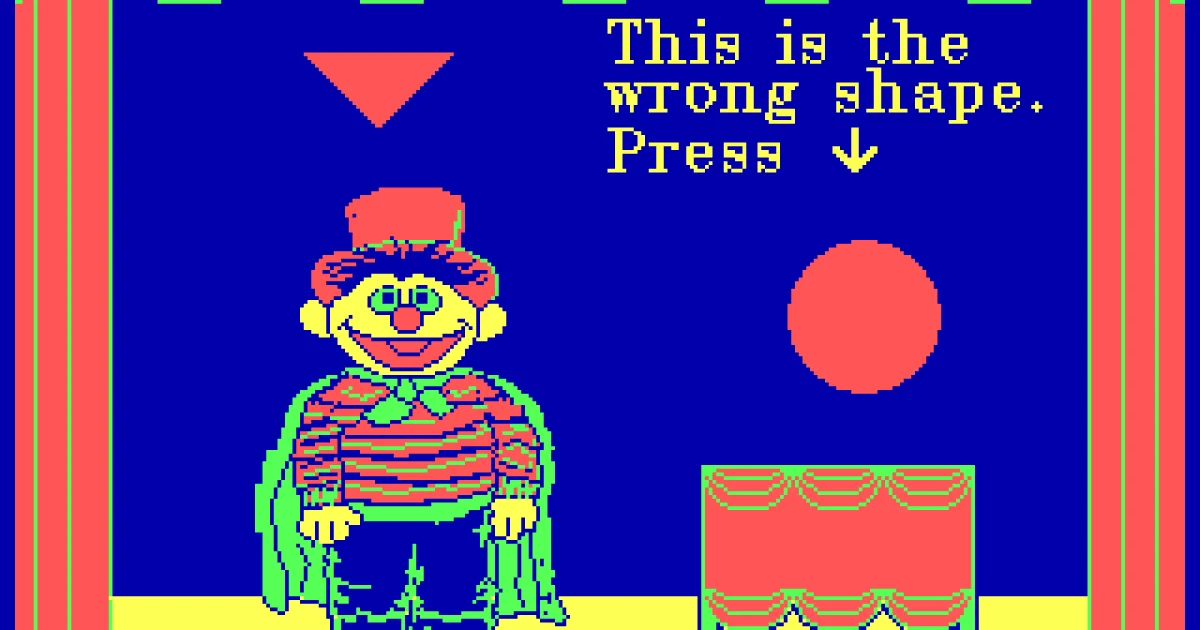
Ernie's Magic Shapes
DOSEducational1984
Ernie's Magic Shapes is an educational puzzle game for DOS built around recognizing and manipulating geometric shapes. The available reference information confirms the title and platform, but does not reliably identify its developer, publisher, release year, or documented critical reception. Its play style appears to focus on short, child-friendly shape activities rather than a continuous action campaign. The game is associated with Ernie as its central named character, but surviving documentation is limited, so specific story details and activity rules should not be assumed. It is best cataloged as a simple early-computer learning title whose appeal comes from visual interaction and basic shape concepts.
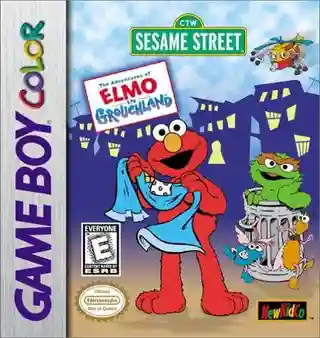
Sesame Street: The Adventures of Elmo in Grouchland
Game BoyPlatformer
Sesame Street: The Adventures of Elmo in Grouchland is a children’s platform game developed and published by NewKidCo for Game Boy in 1999. It adapts the setting and characters of the Sesame Street film of the same name, sending Elmo into Grouchland on a search connected to his missing blanket. The game uses side-scrolling stages, simple hazards, collectible items, and forgiving challenges aimed at younger players rather than experienced action-game fans. Elmo explores colorful environments, meets familiar Sesame Street characters, and progresses through short sections built around basic movement and jumping. Its reception was limited compared with major platform releases, but it was generally recognized as an accessible licensed title for children and Sesame Street fans.
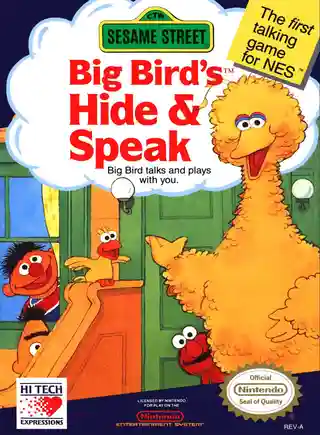
Sesame Street: Big Bird’s Hide & Speak
Nintendo Entertainment System (NES)Educational
Sesame Street: Big Bird’s Hide & Speak is an educational children’s game for the Nintendo Entertainment System, developed by Riedel Software Productions and published by Hi-Tech Expressions. It centers on Big Bird playing a simple hide-and-seek activity in a Sesame Street setting. Players explore the screen, locate hidden objects or characters, and interact with them to hear spoken words and phrases. The game is designed for very young players, with an emphasis on recognition, vocabulary, and basic exploration rather than challenge. Its reception has generally been viewed as a limited but approachable licensed learning title, especially notable for bringing Sesame Street’s preschool format to the NES.

Astro-Grover
DOSEducational
Astro-Grover is a children's educational adventure for DOS centered on Grover's trip into space. The game presents playful activities and exploration designed to introduce young players to basic ideas through Sesame Street-style interaction. Grover serves as the player's guide as locations and tasks are investigated at a gentle pace, with little emphasis on reflexes or failure. The available documentation identifies it as a Sesame Street title, but detailed credits and release information are not consistently recorded in major game references. Its appeal rests primarily on character familiarity, simple interaction, and preschool-oriented learning rather than complex action or advanced simulation.
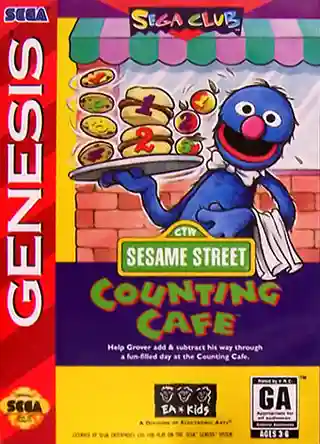
Sesame Street Counting Cafe
Sega GenesisEducational
Sesame Street Counting Cafe is an educational children’s game developed by Realtime Associates and published by NewKidCo for the Sega Genesis. Based on the Sesame Street television series, it centers on simple counting activities presented through a cafe setting. Players help Sesame Street characters handle tasks that require identifying quantities, matching numbers, and making basic choices. The game is designed for young children rather than experienced action-game players, with a gentle pace and straightforward presentation. Its reception has mainly been discussed in the context of licensed educational software: it offers recognizable characters and accessible learning exercises, but its limited challenge and narrow audience make it less suitable for older players.
How is this list kept current?
How rankings are calculated
The list is generated from active EmuGamers catalog entries. Votes and play activity determine order; browser compatibility is reported separately and does not turn an untested game into a higher-ranked recommendation.
| Order | Signal | How it is used |
|---|---|---|
| 1 | Real community votes | Games with at least one recorded vote appear before games with no votes. |
| 2 | Rating confidence | More votes rank first, followed by the rating value. |
| 3 | Play activity | Play count breaks rating ties and orders entries with no votes. |
| 4 | Stable tie-break | Game name keeps otherwise equal results deterministic. |
Which sources support further research?
Official sources and catalog provenance
The ranked games come from the EmuGamers database. The links below are related official project updates used for emulator support and preservation context; they are not citations for the ranking order.