
Catalog activity ranking
Most-Played Sim Games in the EmuGamers Catalog
This page uses active Sim catalog entries and separates popularity signals from compatibility evidence. This activity ranking links directly to 7 catalog entries in the Sim collection.
What is the quick answer?
SimEarth: The Living Planet currently appears first in this activity ranking, followed by SimTower: The Vertical Empire and SimRefinery. Games with real community ratings are considered first; entries without votes are ordered by play activity. This is a catalog signal, not an independent editorial review.
Most-played Sim games
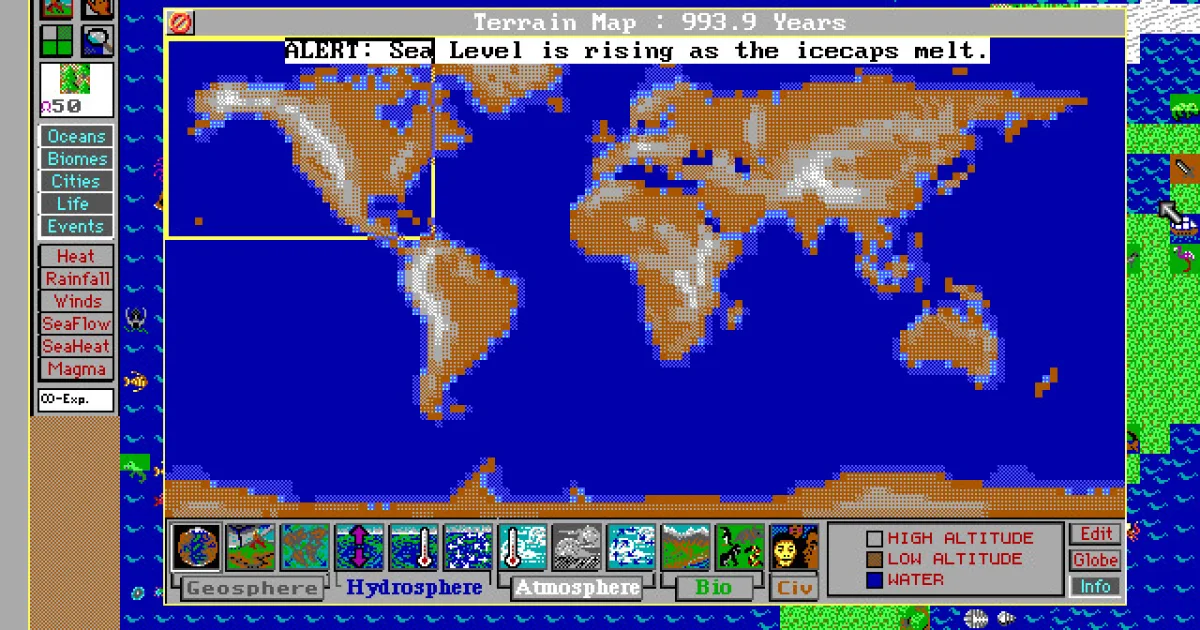
SimEarth: The Living Planet
DOSSimulation
SimEarth: The Living Planet is a planetary simulation game developed and published by Maxis for DOS. Rather than controlling a single hero, the player manages the development of an entire world, adjusting climate, atmosphere, terrain, life, and intelligent species. Its open-ended god-game design combines scientific concepts with strategy and experimentation: players can nurture a stable biosphere, accelerate evolution, or observe the consequences of environmental disasters. The game offers several starting planet types and scenarios, with progress measured through ecological and technological change rather than conventional victory alone. Reviews praised its ambition, depth, and educational value, although its abstract interface and demanding systems made it less immediately accessible than SimCity. It remains an important early example of systems-driven computer simulation.
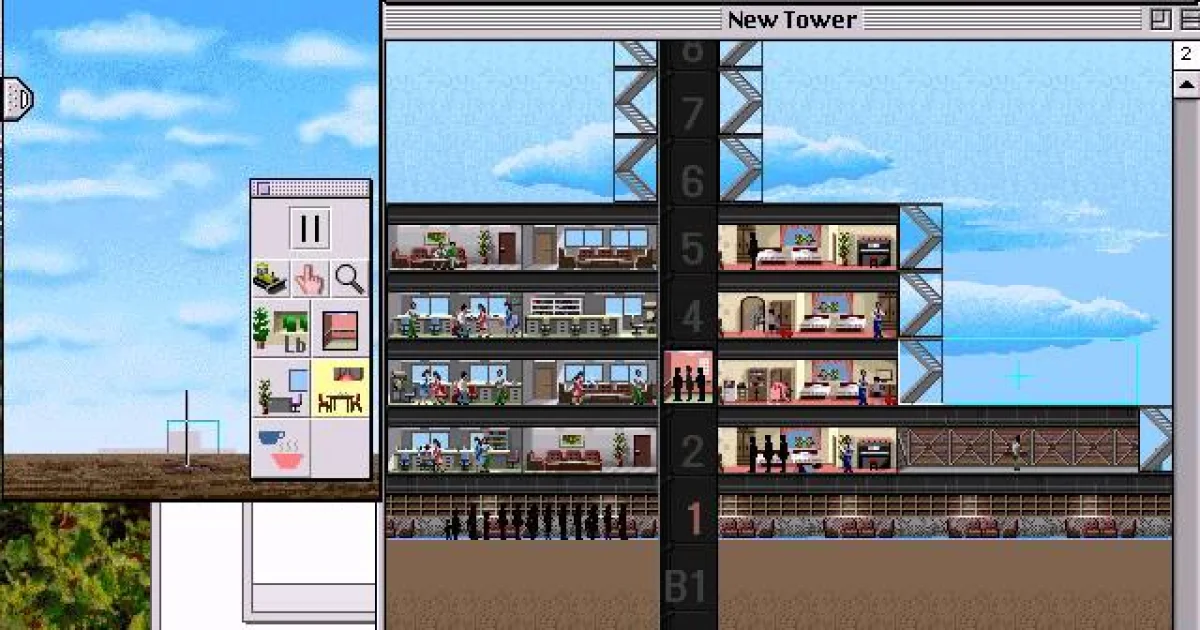
SimTower: The Vertical Empire
DOSConstruction and management simulation
SimTower: The Vertical Empire is a construction and management simulation developed by OpenBook Co., Ltd. and published internationally by Maxis for DOS. Instead of building a conventional city, the player designs a self-contained skyscraper and manages the flow of residents, workers, shoppers, hotel guests, and visitors. The game combines economic planning with architectural problem-solving, as elevators, services, offices, apartments, entertainment, and emergency facilities must work together. Its largely mouse-driven interface supports a deliberate, systems-focused play style rather than direct character control. SimTower earned attention for its unusual vertical setting and accessible presentation, becoming one of the more distinctive simulation games associated with the Maxis catalog during the 1990s.
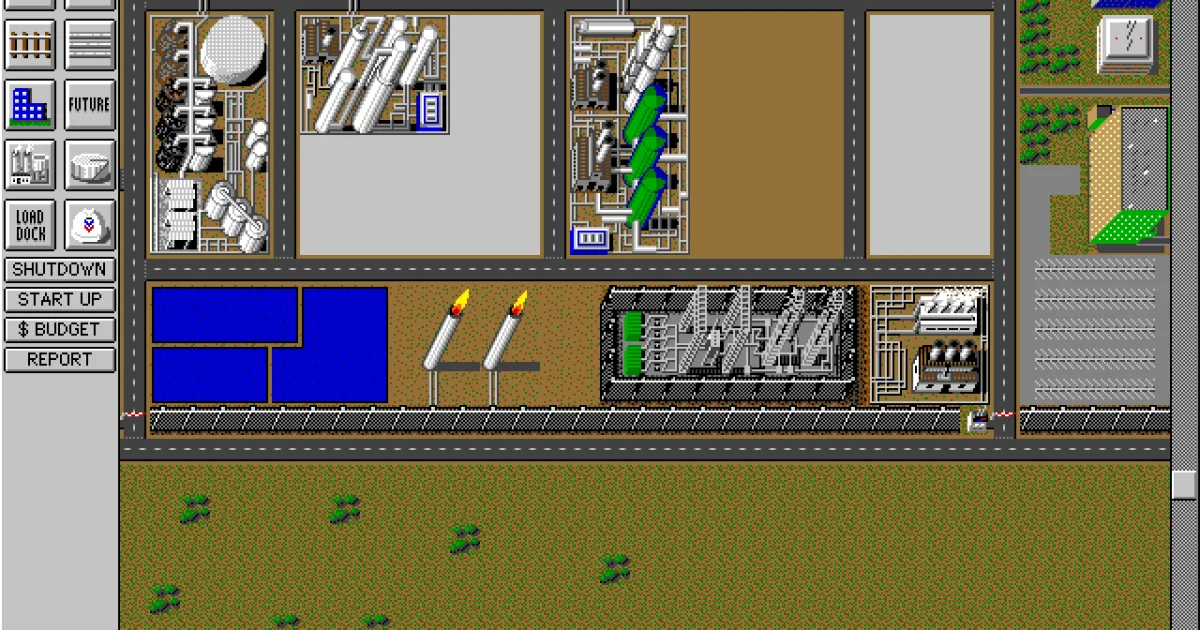
SimRefinery
DOSBusiness Simulation
SimRefinery is a business and industrial simulation developed by Maxis for DOS. Commissioned as an educational model of petroleum refining, it places the player in charge of a refinery rather than a city, household, or amusement park. The core premise is to balance production, storage, staffing, maintenance, safety, and finances while responding to changing operating conditions. The game uses a systems-focused management style built around charts, plant controls, and interconnected processing stages. It is less approachable than Maxis's consumer-oriented simulations and was never a major commercial release, but it is historically notable for showing how the Sim framework could model a real industrial process. Its specialized subject matter and limited distribution have made it a distinctive curiosity among DOS simulation games.
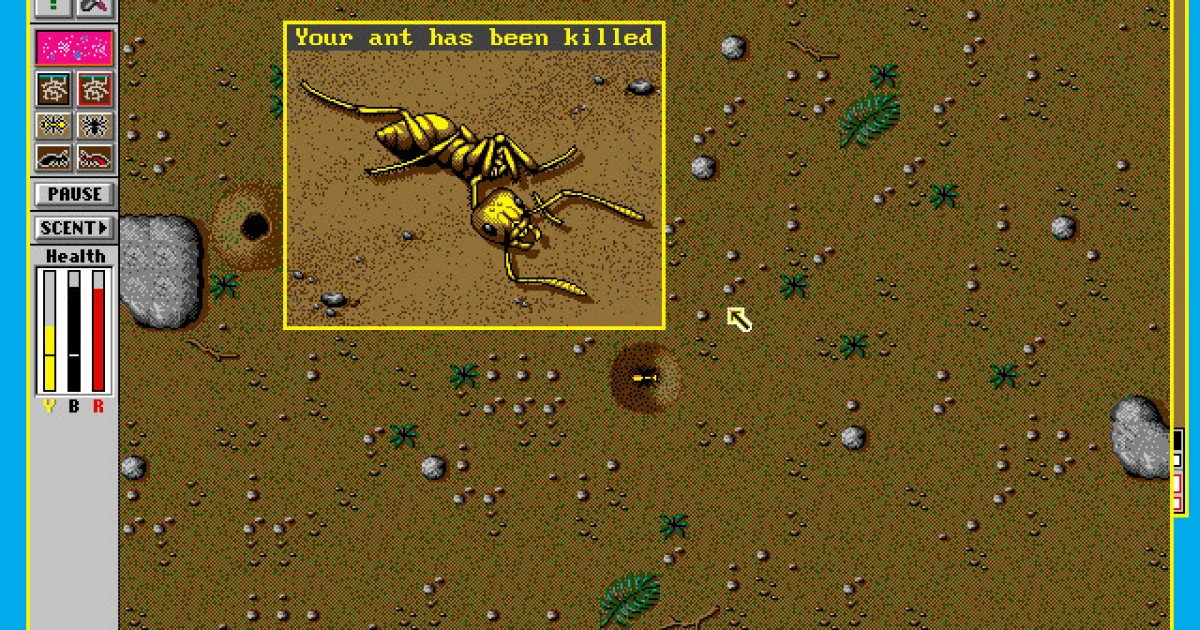
SimAnt: The Electronic Ant Colony
DOSLife Simulation
SimAnt: The Electronic Ant Colony is a life simulation and strategy game developed and published by Maxis for DOS in 1991. The player guides a colony of ants from a ground-level perspective, expanding tunnels, collecting food, raising workers, and defending the nest from rival ants and other threats. Rather than following a fixed story, the game presents a living ecosystem whose outcome depends on colony growth and tactical decisions. Its play style combines experimentation with real-time management, while separate scenarios provide more structured objectives. SimAnt was well received for translating Maxis’s systems-driven design into an unusual biological subject, and it became known for its detailed ant behavior and educational flavor. Its interface and pace can feel demanding, but the game remains a distinctive example of early computer simulation design.
SimLife: The Genetic Playground
DOSLife Simulation
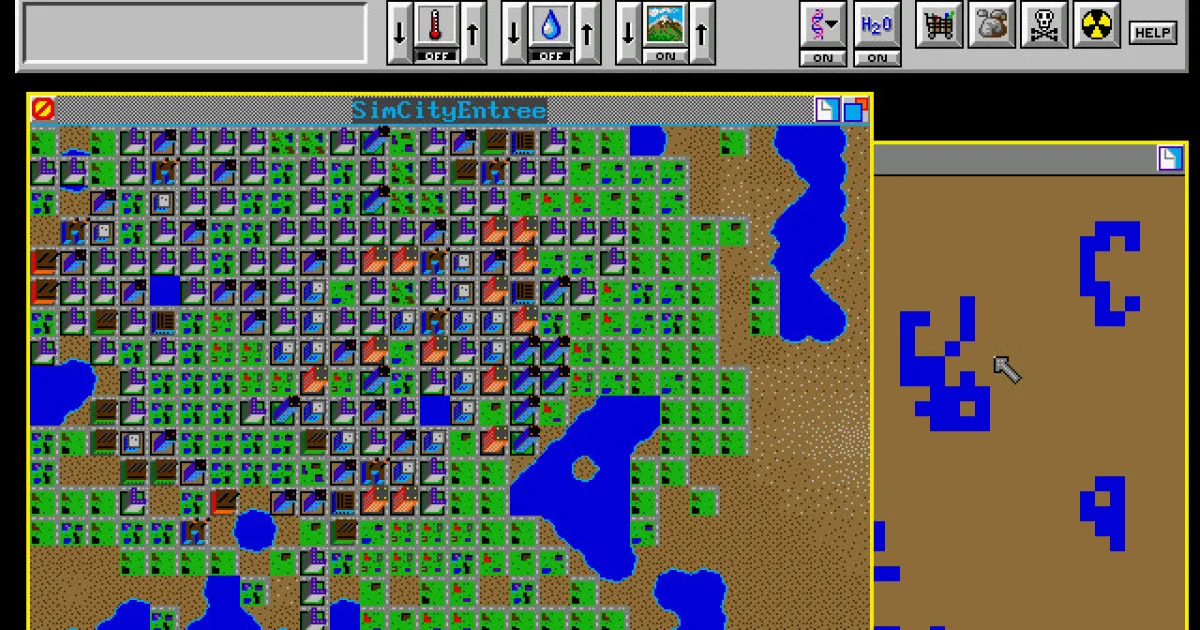
SimLife: The Genetic Playground is a life and ecology simulation developed and published by Maxis for DOS in 1992. Instead of managing a city or household, the player creates a living world populated by plants and animals, then observes how genetics, climate, terrain, and food chains interact. The game is primarily an open-ended sandbox, with experimentation taking precedence over a fixed campaign or conventional victory condition. Its historical reception reflected both the ambition and the difficulty of the concept. SimLife was praised for offering unusual scientific themes and remarkable freedom, while its dense interface, slow experimentation, and sometimes opaque rules made it challenging to approach. It is best understood as an exploratory Maxis simulation rather than a traditional action game.

SimHealth: The National Health Care Simulation
DOSSimulation
SimHealth: The National Health Care Simulation is a policy-focused simulation developed by Thinking Tools, Inc. and published by Maxis for DOS in 1994. Rather than managing hospitals or individual patients, it places the player in the role of a national health-care policymaker. The central challenge is to design a workable system while balancing access, cost, quality, taxation, insurance, and the interests of competing political groups. The game uses data-heavy menus, reports, and policy decisions instead of action-oriented play. Players examine the effects of proposals, adjust interconnected parts of the system, and observe how the simulated country responds over time. Its specialized subject and demanding presentation earned it attention as an ambitious educational and political simulation, although its complexity and dry interface limited its appeal compared with Maxis's more accessible games.
SimFarm: Simulated Farm
DOSSimulation
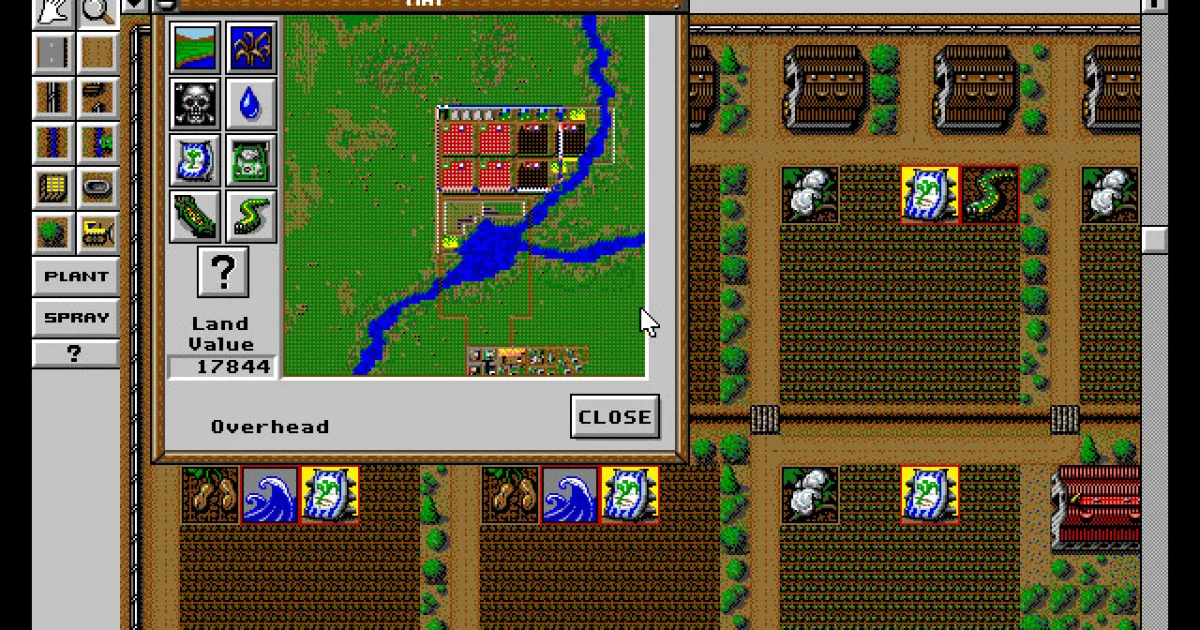
SimFarm: Simulated Farm is a 1993 agricultural simulation developed and published by Maxis for DOS. It puts the player in charge of a working farm, combining land management, crop production, livestock care, construction, and financial planning. The game is presented from an overhead perspective and uses an open-ended sandbox structure rather than a fixed campaign. Players decide how to use their land, respond to weather and market conditions, and expand their operation over time. Its detailed model of rural production reflects Maxis's systems-focused design philosophy. Reception was mixed but generally recognized the game's breadth and approachable interface, while some players found its pace and many management details demanding. SimFarm is remembered as an unusual early home-computer farming simulator and part of Maxis's broader Sim series.
How is this list kept current?
How rankings are calculated
The list is generated from active EmuGamers catalog entries. Votes and play activity determine order; browser compatibility is reported separately and does not turn an untested game into a higher-ranked recommendation.
| Order | Signal | How it is used |
|---|---|---|
| 1 | Real community votes | Games with at least one recorded vote appear before games with no votes. |
| 2 | Rating confidence | More votes rank first, followed by the rating value. |
| 3 | Play activity | Play count breaks rating ties and orders entries with no votes. |
| 4 | Stable tie-break | Game name keeps otherwise equal results deterministic. |
Which sources support further research?
Official sources and catalog provenance
The ranked games come from the EmuGamers database. The links below are related official project updates used for emulator support and preservation context; they are not citations for the ranking order.