
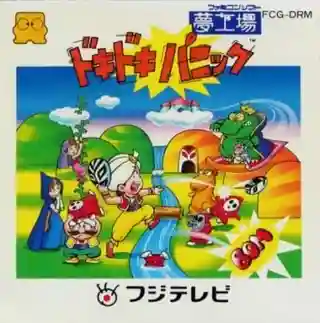
Yume Kōjō: Doki Doki Panic
fdsPlatformer1987
Documented for this version
The available controller inputs are not sufficiently documented to list reliably by button.
How it plays
The program teaches basic hand-knitting procedures through Japanese instructional screens. Players move through lessons and pattern information, then use the controller to select commands or advance the displayed material.
Its structure is instructional rather than stage-based: there are no action levels, combat encounters, or conventional victory conditions. Progress depends on following the presented knitting guidance and examining the available patterns and techniques. The Famicom Disk System format supplies the program’s menu-driven lesson presentation, while the real work of producing an item takes place outside the console with yarn and needles.
Plan your run
Read each lesson in order before attempting the associated stitch. Keep the displayed pattern visible while working with real yarn, and treat the program as a reference guide rather than a conventional game with a score or time limit.
Because the instructions are in Japanese, identifying the stitch diagrams and following the sequence carefully is more useful than experimenting with menu commands. There is no documented combat route, password system, or character progression to optimize.
Before you begin
Use the knitting diagrams as a step-by-step reference instead of expecting automatic on-screen knitting.
The Japanese text is important for understanding the lesson progression and pattern explanations.
I Am a Teacher: Teami no Kiso is an educational knitting simulator released for the Famicom Disk System in 1986. Developed and published by Nintendo, it presents Japanese-language lessons for players who want to learn the fundamentals of hand knitting. Instead of controlling a conventional adventure hero, the player follows instructional screens, selects patterns, and works through the sequence of stitches needed to produce knitted items. The program is closer to an interactive reference lesson than to a score-based game, with its value coming from explaining technique rather than testing reflexes. Its specialized subject and unusual format made it a distinctive example of Nintendo’s early Famicom educational software, although its appeal was naturally limited for players who could not read Japanese or had no interest in knitting.
Catalog entry maintained by EmuGamers Editorial Team

Community discussion
What are players saying?