
Catalog activity ranking
Most-Played Bandai WonderSwan Games in the EmuGamers Catalog
This page uses active Bandai WonderSwan catalog entries and separates popularity signals from compatibility evidence. This activity ranking is drawn from 20 Bandai WonderSwan games in the EmuGamers catalog.
What is the quick answer?
Super Robot Taisen Compact currently appears first in this activity ranking, followed by Guilty Gear Petit 2 and Digimon: Battle Spirit. Games with real community ratings are considered first; entries without votes are ordered by play activity. This is a catalog signal, not an independent editorial review.
Most-played Bandai WonderSwan games
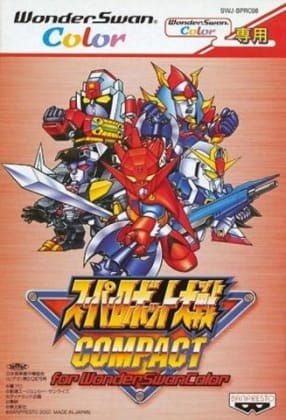
Super Robot Taisen Compact
Bandai WonderSwanTactical RPG1999
Super Robot Taisen Compact is a tactical role-playing game developed and published by Banpresto for the Bandai WonderSwan. It combines robots and pilots from several anime licenses in a single campaign, with battles played on grid-based maps. Players deploy a team, move units by turn, manage energy and ammunition, and use pilots’ spirit commands to overcome enemy formations. The game is structured as a sequence of story scenarios rather than a collection of short arcade stages, and unit upgrades carry across battles. Its portable presentation is more restrained than larger console entries, but the title was notable for bringing the Super Robot Wars formula to WonderSwan and for supporting the platform’s monochrome display and compact controls.
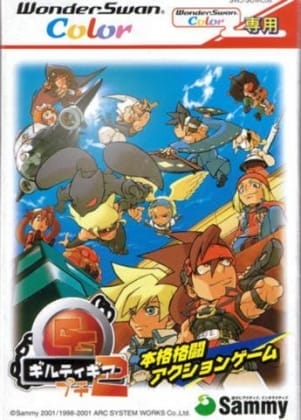
Guilty Gear Petit 2
Bandai WonderSwanFighting
Guilty Gear Petit 2 is a compact 2D fighting game developed by Arc System Works for Bandai’s WonderSwan handheld and published by Sammy Corporation. It adapts the Guilty Gear concept to a portable format, using simplified presentation and controls while retaining character-based combat, special techniques, and competitive matches. The game is a spin-off rather than a direct replacement for the main console entries. Its small screen and monochrome-oriented handheld hardware shape the experience, but the focus remains on one-on-one battles. Reception has generally centered on its novelty as a portable Guilty Gear title and its limitations compared with larger versions.
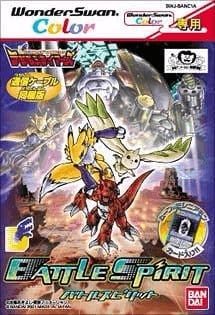
Digimon: Battle Spirit
Bandai WonderSwanFighting
Digimon: Battle Spirit is a side-view fighting game developed by Dimps and published by Bandai for the WonderSwan Color. Based primarily on Digimon Tamers, it turns battles between Digimon into compact arena matches rather than a traditional role-playing adventure. Players choose a Digimon, attack rivals, collect spirit items, and try to fill the battle gauge before the opponent. The game is built for short sessions, with simple controls suited to the handheld’s small interface and a roster drawn from the television series. Its Japan-only WonderSwan release gave it a relatively niche audience, while the later Game Boy Advance version made the Battle Spirit concept more widely known. It is generally remembered as a straightforward, character-focused portable fighter rather than a deep tournament game.
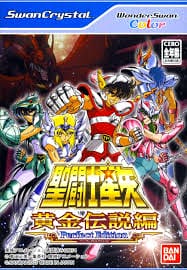
Saint Seiya: Ougon Densetsu Hen - Perfect Edition
Bandai WonderSwanAction RPG
Saint Seiya: Ougon Densetsu Hen - Perfect Edition is a Japanese action role-playing game developed and published by Bandai for the WonderSwan Color. It revisits the story and mechanics of the earlier Saint Seiya: Ougon Densetsu Hen, following the Bronze Saints as they defend Athena and confront powerful opponents from the series. The game combines side-scrolling combat, menu-based commands, exploration, and stat management rather than presenting a conventional arcade brawler. Its main appeal is the use of recognizable characters, attacks, and story scenes in a portable format. Reception is chiefly associated with its status as a more complete and refined remake for Saint Seiya fans, although its Japanese-only presentation limits accessibility for players unfamiliar with the source material.
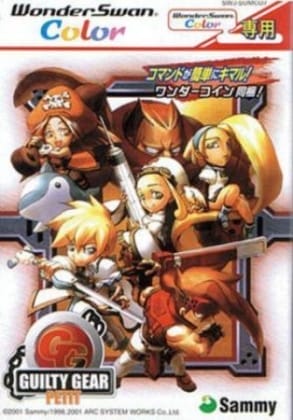
Guilty Gear Petit
Bandai WonderSwanFighting
Guilty Gear Petit is a 2001 portable fighting game developed by Sammy Studios for Bandai’s WonderSwan. It adapts the Guilty Gear formula into a compact format, using small character sprites, short rounds, and a roster drawn from the early arcade games alongside the new fighter Fanny. The core premise remains a tournament of heavily stylized warriors with distinct weapons and special techniques. Matches emphasize positioning, attack timing, and learning each fighter’s range rather than lengthy story sequences. Its presentation is necessarily simpler than the PlayStation releases, but the game retains recognizable characters and competitive structure. Reception has generally treated it as an interesting handheld side entry: limited by the WonderSwan hardware, yet notable for bringing a technically ambitious fighting series to a monochrome-oriented portable system.
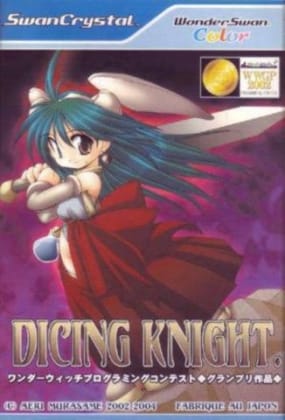
Dicing Knight
Bandai WonderSwanAction RPG
Dicing Knight. is a Japanese action role-playing game developed by skip Ltd. and published by Bandai for the WonderSwan. It combines real-time dungeon combat with randomly arranged rooms and dice-based systems, giving each expedition a changing structure. The player controls a knight who explores dangerous areas, defeats enemies, gathers equipment, and tries to survive long enough to improve the run. The game is designed around short, replayable excursions rather than a conventional linear adventure. Its compact presentation and unusual mechanics made it a distinctive late WonderSwan release, although its limited Japanese availability kept it relatively obscure outside Japan. It is best known among enthusiasts for its brisk combat, procedural challenge, and strong emphasis on resource management.
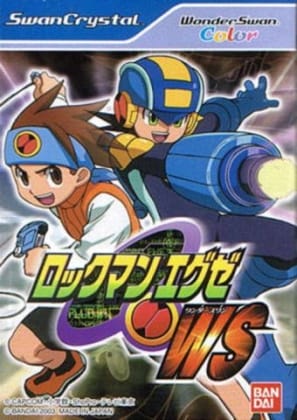
Rockman EXE WS
Bandai WonderSwanAction
Rockman EXE WS is a Japanese side-scrolling action game developed by Capcom and published by Bandai for the WonderSwan family. It uses the characters and network-themed setting of Mega Man Battle Network, but presents them in a more traditional action format than the main series’ real-time card-battle RPG structure. Players guide MegaMan.EXE through stages while Lan supports him from the real world. The game combines platforming, enemy encounters, and light puzzle or traversal elements across a sequence of missions. Its release made it a notable handheld side story for the franchise, although it remained a Japan-only title and received far less international attention than the Game Boy Advance Battle Network games.
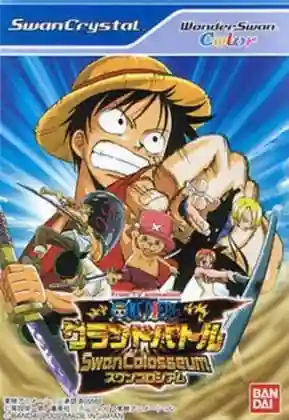
From TV Animation One Piece - Grand Battle Swan Colosseum
Bandai WonderSwanFighting
From TV Animation One Piece - Grand Battle Swan Colosseum is a 2002 fighting game developed and published by Bandai for the WonderSwan. It adapts the early One Piece world into compact one-on-one battles, using recognizable characters and attacks from the series. Matches take place in two-dimensional arenas and emphasize direct strikes, jumping, guarding, and special techniques rather than complex combination systems. The game is designed around short portable sessions, with a single-player progression structure and versus play. Its appeal is primarily archival and fan-oriented: it offers a distinct handheld interpretation of One Piece, although its limited presentation and hardware constrain the scale of its battles.
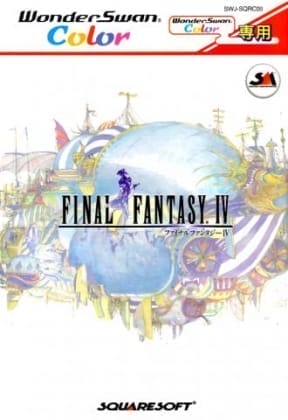
Final Fantasy IV
Bandai WonderSwanRPG2002
Final Fantasy IV on Bandai WonderSwan is an enhanced port of Square's classic JRPG, developed with support from TOSE. Centered on dark knight Cecil's path to redemption, it blends fantasy warfare, lunar mythology, and character-driven drama. The game is especially famous for helping popularize the Active Time Battle system and is widely regarded as a major milestone in the series' storytelling evolution.
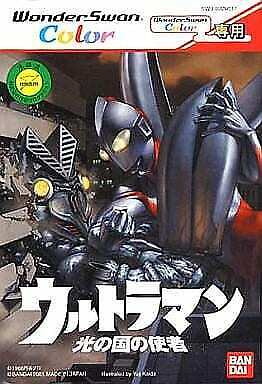
Ultraman: Messenger of the Land of Light
Bandai WonderSwanAction
Ultraman: Messenger of the Land of Light is a 1999 Bandai action game for the original WonderSwan. It is based on the Ultraman science-fiction franchise and places the player in control of the giant hero during battles against invading monsters. The game uses a side-view format with direct combat, combining movement, attacks, and defensive positioning across a sequence of encounters. Its compact presentation reflects the limitations of the handheld while retaining the series’ tokusatsu-inspired premise. Reception was generally niche and tied closely to interest in Ultraman and the WonderSwan library; detailed contemporary critical coverage is limited. The game is primarily notable as a licensed handheld interpretation rather than as a widely recognized genre landmark.
How is this list kept current?
How rankings are calculated
The list is generated from active EmuGamers catalog entries. Votes and play activity determine order; browser compatibility is reported separately and does not turn an untested game into a higher-ranked recommendation.
| Order | Signal | How it is used |
|---|---|---|
| 1 | Real community votes | Games with at least one recorded vote appear before games with no votes. |
| 2 | Rating confidence | More votes rank first, followed by the rating value. |
| 3 | Play activity | Play count breaks rating ties and orders entries with no votes. |
| 4 | Stable tie-break | Game name keeps otherwise equal results deterministic. |
Which sources support further research?
Official sources and catalog provenance
The ranked games come from the EmuGamers database. The links below are related official project updates used for emulator support and preservation context; they are not citations for the ranking order.