
Catalog activity ranking
Most-Played Scooby-Doo Games in the EmuGamers Catalog
This page uses active Scooby-Doo catalog entries and separates popularity signals from compatibility evidence. This activity ranking links directly to 3 catalog entries in the Scooby-Doo collection.
What is the quick answer?
2 Games in 1: Scooby-Doo + Scooby-Doo 2: Monsters Unleashed currently appears first in this activity ranking, followed by 2 Games in 1: Scooby-Doo! - Mystery Mayhem + Scooby-Doo and the Cyber Chase and Scooby-Doo Mystery. Games with real community ratings are considered first; entries without votes are ordered by play activity. This is a catalog signal, not an independent editorial review.
Most-played Scooby-Doo games

2 Games in 1: Scooby-Doo + Scooby-Doo 2: Monsters Unleashed
Game Boy AdvanceAction
2 Games in 1: Scooby-Doo + Scooby-Doo 2: Monsters Unleashed is a Game Boy Advance compilation pairing two licensed action-adventure games based on the Scooby-Doo films. The collection follows Scooby, Shaggy, Fred, Daphne, and Velma as they investigate unusual events, evade threats, and solve mysteries inspired by the two movie settings. Both games use side-scrolling exploration with light platforming, item collection, environmental puzzles, and encounters with recognizable monsters. The compilation was published by THQ during the Game Boy Advance’s licensed-game period. Reception was generally mixed: the recognizable license and approachable structure appealed to younger players, while critics commonly noted simple mechanics and limited depth compared with stronger adventure games.

2 Games in 1: Scooby-Doo! - Mystery Mayhem + Scooby-Doo and the Cyber Chase
Game Boy AdvanceAction-Adventure
2 Games in 1 combines two licensed Scooby-Doo adventures on one Game Boy Advance cartridge: Mystery Mayhem and Scooby-Doo and the Cyber Chase. Both are action-adventure games built around exploration, clue gathering, light puzzles, and encounters with ghosts or monsters. Players guide Scooby and Shaggy through mystery-themed locations while working with the rest of the Mystery Inc. team. The compilation provides two separate campaigns rather than a new combined story. Reception was generally mixed, with the recognizable television setting and humorous presentation appealing to fans, while limited depth and occasional control frustrations reduced its wider appeal.
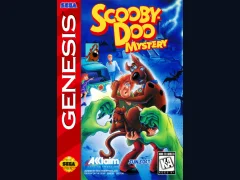
Scooby-Doo Mystery
Sega GenesisAdventure
Scooby-Doo Mystery is a graphic adventure game developed by Sun Corporation and published by Acclaim Entertainment for the Sega Genesis in 1995. It adapts the familiar animated formula into interactive cases, combining exploration, clue gathering, item use, dialogue, and puzzle solving. Players guide the Mystery Inc. team through eerie locations while investigating apparently supernatural events and working toward an explanation. The game is structured around separate mysteries rather than arcade-style action, with progress depending on examining scenes and using the right objects at the right time. Its colorful presentation and recognizable characters were faithful to the cartoon, while contemporary reception was mixed, with criticism commonly directed at its slow pace and limited interactivity.
How is this list kept current?
How rankings are calculated
The list is generated from active EmuGamers catalog entries. Votes and play activity determine order; browser compatibility is reported separately and does not turn an untested game into a higher-ranked recommendation.
| Order | Signal | How it is used |
|---|---|---|
| 1 | Real community votes | Games with at least one recorded vote appear before games with no votes. |
| 2 | Rating confidence | More votes rank first, followed by the rating value. |
| 3 | Play activity | Play count breaks rating ties and orders entries with no votes. |
| 4 | Stable tie-break | Game name keeps otherwise equal results deterministic. |
Which sources support further research?
Official sources and catalog provenance
The ranked games come from the EmuGamers database. The links below are related official project updates used for emulator support and preservation context; they are not citations for the ranking order.