
Spider-Man
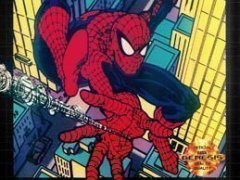
A mobile hero who uses acrobatics and web attacks to navigate hazards and fight enemies.
Documented for this version
D-pad | Move the current character |
|---|---|
Start | Pause the game |
How it plays
The game uses a side-scrolling perspective, with each stage focusing on a particular hero and his or her abilities. Players move through hazards, defeat enemies, avoid traps, and reach the end of the level before facing a larger challenge.
Spider-Man relies on agility and web-based attacks, while the X-Men have different movement or attack properties. The stages are played in a set campaign rather than a multiplayer mode, and successful completion of the character sections advances the story toward Arcade.
Plan your run
Learn the hazards in each character's stage before prioritizing speed. Use the hero's specialized attack or movement ability instead of treating every section like a standard platforming level.
Conserve health where possible, watch enemy patterns, and approach boss encounters cautiously. Repeated attempts are often necessary because hazards and enemy placement can punish rushed movement.
Meet the cast
A mobile hero who uses acrobatics and web attacks to navigate hazards and fight enemies.
An X-Man who attacks with his optic blasts.
An X-Man with aerial movement and weather-based powers.
A close-range fighter equipped with adamantium claws.
An X-Man who uses charged playing cards as projectiles.
The villain who kidnaps the X-Men and stages the game's dangerous challenges.
Before you begin
Use each character's distinct movement and attack style rather than relying on one universal approach.
Study trap timing and avoid rushing into unfamiliar sections.
Preserve health for boss encounters.
Spider-Man & X-Men: Arcade's Revenge is a superhero action platformer developed by Software Creations and published by LJN for the Sega Genesis in 1992. The game follows Spider-Man and four X-Men—Cyclops, Storm, Wolverine, and Gambit—as they confront Arcade after he kidnaps the mutants. Each hero receives a separate stage built around different movement and combat abilities, giving the game a varied but demanding structure. Its difficulty and uneven character handling divided contemporary players, although the recognizable Marvel cast and distinct stage concepts made it a notable licensed 16-bit release. The presentation combines comic-book imagery with arcade-influenced action, while progression depends on clearing the heroes' stages and advancing to the final confrontation.
Catalog entry maintained by EmuGamers Editorial Team
Community discussion
What are players saying? 0