
Catalog activity ranking
Most-Played Phantasy Star Games in the EmuGamers Catalog
This page uses active Phantasy Star catalog entries and separates popularity signals from compatibility evidence. This activity ranking links directly to 4 catalog entries in the Phantasy Star collection.
What is the quick answer?
Phantasy Star IV: The End of the Millennium currently appears first in this activity ranking, followed by Phantasy Star and Phantasy Star III: Generations of Doom. Games with real community ratings are considered first; entries without votes are ordered by play activity. This is a catalog signal, not an independent editorial review.
Most-played Phantasy Star games
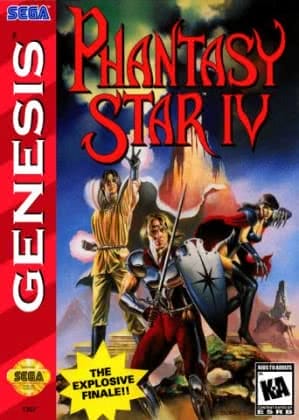
Phantasy Star IV: The End of the Millennium
Sega GenesisRole-Playing Game
Phantasy Star IV: The End of the Millennium is a science-fiction role-playing game developed by Sega AM7 and published by Sega for the Sega Genesis. It follows Chaz Ashley, a young hunter, as a series of ecological disasters and ancient threats draw him into a conflict spanning the Algol Star System. The game combines traditional menu-driven, turn-based battles with exploration across towns, dungeons, and multiple planets. Its comic-panel storytelling, party combination techniques, and darker narrative gave the series a distinctive presentation on 16-bit hardware. Critics and players have generally praised its pacing, combat system, character writing, and polished audiovisual design, and it is often regarded as one of the Genesis’s strongest role-playing games.
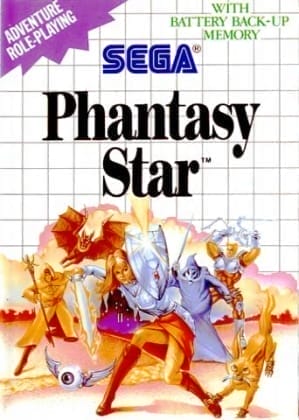
Phantasy Star
Sega Master System (SMS)Role-Playing Game
Phantasy Star is a science-fantasy role-playing game developed by Sega AM7 and released for the Sega Master System. It follows Alis, a young woman who begins a quest for justice after the death of her brother Nero under the rule of King Lassic. The adventure crosses the planets of Algol, combining towns, dungeons, field exploration, and first-person turn-based battles. Players recruit a party, gather equipment, solve environmental puzzles, and uncover the cause of the kingdom's corruption. Its animated presentation, three-dimensional dungeon perspective, and ambitious world design made it one of the Master System's most technically notable RPGs. The game was widely praised for its scope and remains an important early console role-playing title.
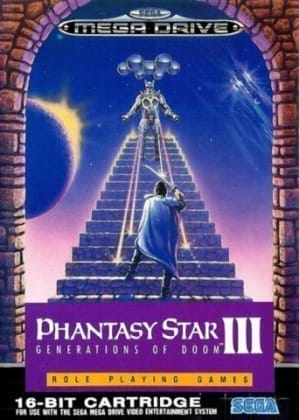
Phantasy Star III: Generations of Doom
Sega GenesisRole-Playing Game
Phantasy Star III: Generations of Doom is a Japanese role-playing game developed and published by Sega for the Mega Drive and released in North America for the Sega Genesis in 1991. It follows Rhys and his descendants as they investigate a conflict between the planets Algo and Canaan, with marriage choices changing the next generation and the eventual conclusion. The game uses overhead exploration, menu-driven turn-based battles, towns, dungeons, vehicles, and science-fantasy equipment. Its generational structure is the central feature: choices made by one hero shape later protagonists, routes, and endings. Reception was mixed compared with the more acclaimed second game, but its unusual branching narrative remains one of the most distinctive experiments in the Phantasy Star series.
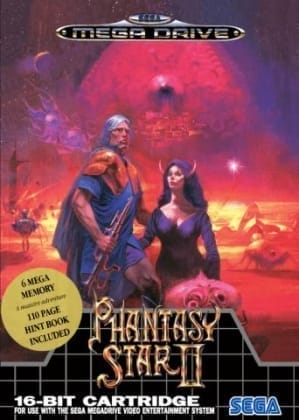
Phantasy Star II
Sega GenesisRole-Playing Game
Phantasy Star II is a science-fiction role-playing game developed by Sega AM7 and published by Sega for the Sega Genesis. It follows government agent Rolf as he investigates a mysterious biological threat spreading across the Algo solar system. The game combines overhead exploration, menu-driven turn-based battles, equipment management, and a large party of recruitable companions. Its darker story, challenging combat, and substantial scope earned strong historical recognition, although critics also noted its high difficulty and limited visual guidance. It became one of the Genesis library’s defining Japanese-style RPGs.
How is this list kept current?
How rankings are calculated
The list is generated from active EmuGamers catalog entries. Votes and play activity determine order; browser compatibility is reported separately and does not turn an untested game into a higher-ranked recommendation.
| Order | Signal | How it is used |
|---|---|---|
| 1 | Real community votes | Games with at least one recorded vote appear before games with no votes. |
| 2 | Rating confidence | More votes rank first, followed by the rating value. |
| 3 | Play activity | Play count breaks rating ties and orders entries with no votes. |
| 4 | Stable tie-break | Game name keeps otherwise equal results deterministic. |
Which sources support further research?
Official sources and catalog provenance
The ranked games come from the EmuGamers database. The links below are related official project updates used for emulator support and preservation context; they are not citations for the ranking order.