
Catalog activity ranking
Most-Played Shinobi Games in the EmuGamers Catalog
This page uses active Shinobi catalog entries and separates popularity signals from compatibility evidence. This activity ranking links directly to 10 catalog entries in the Shinobi collection.
What is the quick answer?
Shinobi currently appears first in this activity ranking, followed by The Revenge of Shinobi and Shadow Dancer. Games with real community ratings are considered first; entries without votes are ordered by play activity. This is a catalog signal, not an independent editorial review.
Most-played Shinobi games
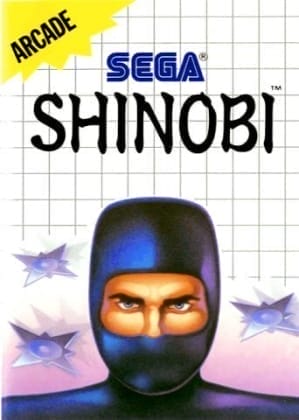
Shinobi
Sega Master System (SMS)Action
Shinobi is a side-scrolling action game developed and published by Sega for the Sega Master System. The player controls Joe Musashi, a ninja who fights through enemy-held territory to rescue kidnapped children and defeat a criminal organization. Play alternates between careful platforming, close-range attacks, and shuriken throwing against groups of soldiers, creatures, and bosses. The Master System version adapts the arcade game with reworked stages, a more deliberate pace, and console-specific presentation. Its challenge comes from enemy placement, limited room for mistakes, and memorizing hazards rather than from a complex upgrade system. Shinobi was well regarded as a strong home conversion and helped establish the series on Sega hardware.
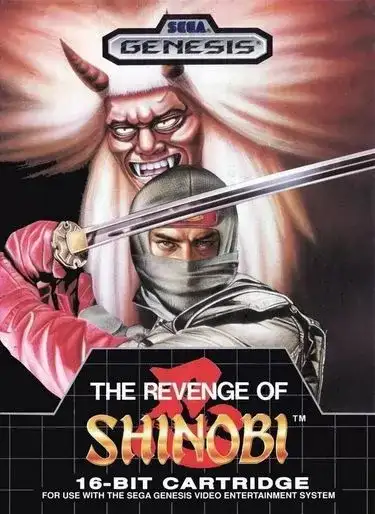
The Revenge of Shinobi
Sega GenesisAction
The Revenge of Shinobi is a side-scrolling action platformer developed and published by Sega for the Sega Genesis in 1989. Players control Joe Musashi, a ninja seeking revenge against the criminal organization Neo Zeed after it attacks his village and kidnaps his master’s daughter. The game combines close-range martial arts, thrown shuriken, acrobatic movement, and limited ninjutsu in carefully structured stages. Its memorable presentation, demanding combat, varied boss encounters, and atmospheric music helped establish it as one of the Genesis’s defining action games. Enemy and boss designs changed in later revisions because of licensing concerns, but the core campaign and mechanics remained substantially the same.
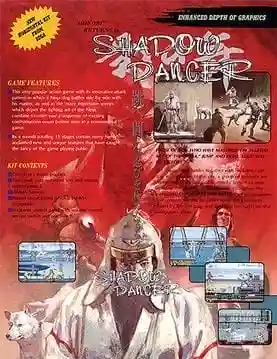
Shadow Dancer
Arcade SystemsAction
Shadow Dancer: The Secret of Shinobi is a 1989 arcade action-platform game developed and published by Sega. It follows Hayate, a ninja who fights a criminal syndicate with help from his trained dog, Yamato. The game combines side-scrolling movement, close-range attacks, thrown weapons, and limited dog commands in compact combat stages. Its fast pace and distinctive two-character combat system made it a notable arcade follow-up to Shinobi. The game was generally well received for its responsive controls, attractive presentation, and challenging action, although its difficulty and limited continues could make progress demanding.
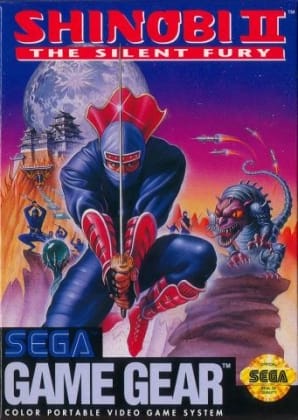
The GG Shinobi II: The Silent Fury
game-gearAction
The GG Shinobi II: The Silent Fury is a side-scrolling action platformer developed and published by Sega for the Game Gear. It follows a ninja warrior fighting through hostile stages filled with soldiers, creatures, traps, and powerful bosses. The game combines close-range attacks, jumping, climbing, and special ninja techniques in a compact portable format. Its stage-based structure lets players approach several areas in different orders, with progress opening new abilities and routes. Contemporary coverage generally regarded it as a strong handheld continuation of Sega’s Shinobi formula, although the small screen and limited hardware impose shorter stages and simpler presentation than the arcade and home-console games.
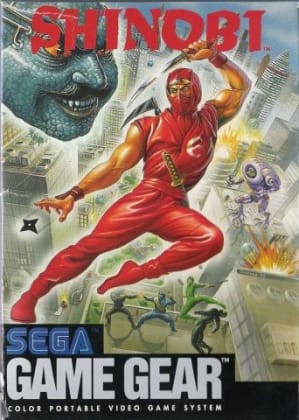
Shinobi
game-gearAction
Shinobi for Game Gear is a side-scrolling action game developed and published by Sega. Players control Joe Musashi, a modern ninja sent to fight through enemy-controlled areas and rescue kidnapped children. The game combines close-range attacks, thrown weapons, jumping, and limited ninja magic in compact stages designed for the handheld screen. Its play style follows the action-platform conventions of Sega's arcade-era ninja games, but the Game Gear version presents its own simplified structure and presentation. Reception was generally favorable for bringing fast ninja combat to a portable system, although the reduced screen size and hardware limitations make the experience less expansive than the arcade original.
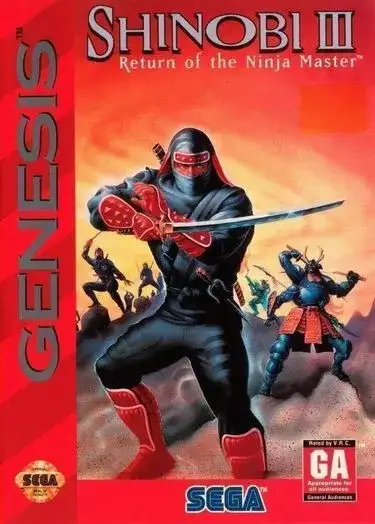
Shinobi III: Return of the Ninja Master
Sega GenesisAction
Shinobi III: Return of the Ninja Master is a side-scrolling action platformer developed by Megasoft and published by Sega for the Sega Genesis in 1993. It stars Joe Musashi, a highly mobile ninja fighting a renewed threat from the criminal Neo Zeed organization. The game combines sword attacks, thrown projectiles, acrobatic movement, wall techniques, and powerful ninjutsu spells across stages with varied hazards and bosses. Its responsive controls, fluid animation, dramatic set pieces, and demanding but fair difficulty made it one of the most highly regarded action games on the Genesis. It is a direct sequel to Shadow Dancer: The Secret of Shinobi and is commonly considered one of the strongest entries in the Shinobi series.
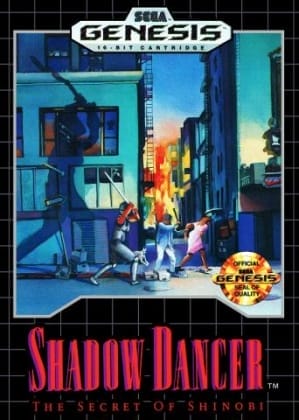
Shadow Dancer: The Secret of Shinobi
Sega GenesisAction
Shadow Dancer: The Secret of Shinobi is a side-scrolling action game developed and published by Sega for the Sega Genesis. It follows Hayate, a young ninja, and his trained dog Yamato as they fight a terrorist organization threatening New York City. The game combines fast platforming with close-range swordplay, thrown shuriken, magic techniques, and coordinated attacks with the dog. Its structure is built around a sequence of stages ending in boss encounters, with difficulty rising through increasingly aggressive enemies and tighter hazards. The Genesis version was generally recognized for responsive controls, strong visual presentation, and demanding arcade-style action, although its difficulty can be severe for new players.
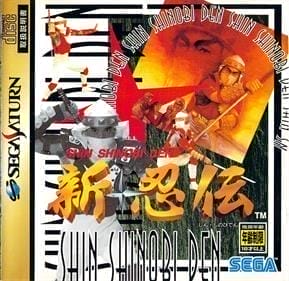
Shinobi Legions
ssAction
Shinobi Legions is a side-scrolling action game developed by Sega AM7 for the Sega Saturn. Known in Japan as Shin Shinobi Den, it follows the ninja Sho as he battles through an organization led by his former brother Kazuma. The game combines sword fighting, projectile attacks, platforming, and boss encounters across cinematic stages. Its use of digitized actors and live-action-style presentation distinguishes it from earlier sprite-based Shinobi games. The Saturn release received mixed historical reception: critics recognized its atmosphere, music, and visual ambition, while commonly noting stiff movement, uneven difficulty, and a shorter experience than some genre rivals. It remains a notable Saturn-era entry in Sega’s long-running ninja series.
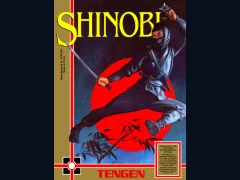
Shinobi
Nintendo Entertainment System (NES)Action
Shinobi is a side-scrolling action platformer developed by Sega and released for the Nintendo Entertainment System in 1989. Players control the modern ninja Joe Musashi as he fights through enemy-held locations to rescue kidnapped children and defeat the criminal organization behind the attacks. The game combines running, jumping, crouching, close-range strikes, and thrown weapons, with limited special attacks adding tactical options. Its stage-based structure reflects the arcade original while adapting the action for home play. The NES version is generally regarded as a demanding conversion with responsive basics, recognizable Shinobi mechanics, and notable differences from the arcade game.
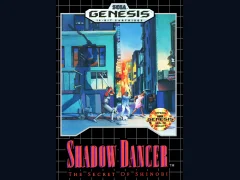
Shadow Dancer: The Secret of Shinobi
Sega GenesisAction
Shadow Dancer: The Secret of Shinobi is a side-scrolling action game developed and published by Sega for the Genesis. It follows the ninja Hayate and his trained dog Yamato as they fight a terrorist organization threatening the city. The game combines platforming, close-range sword attacks, thrown weapons, and limited ninja magic across a sequence of dangerous stages. Its design emphasizes quick reactions and careful positioning rather than exploration. Yamato can restrain certain enemies, creating openings for Hayate, but he can also be injured. The Genesis version was generally regarded as a strong, demanding home adaptation of Sega’s arcade-style Shinobi formula, with vivid backgrounds, varied bosses, and a notably high difficulty.
How is this list kept current?
How rankings are calculated
The list is generated from active EmuGamers catalog entries. Votes and play activity determine order; browser compatibility is reported separately and does not turn an untested game into a higher-ranked recommendation.
| Order | Signal | How it is used |
|---|---|---|
| 1 | Real community votes | Games with at least one recorded vote appear before games with no votes. |
| 2 | Rating confidence | More votes rank first, followed by the rating value. |
| 3 | Play activity | Play count breaks rating ties and orders entries with no votes. |
| 4 | Stable tie-break | Game name keeps otherwise equal results deterministic. |
Which sources support further research?
Official sources and catalog provenance
The ranked games come from the EmuGamers database. The links below are related official project updates used for emulator support and preservation context; they are not citations for the ranking order.