
Catalog activity ranking
Most-Played Atari 2600 Games in the EmuGamers Catalog
This page uses active Atari 2600 catalog entries and separates popularity signals from compatibility evidence. This activity ranking is drawn from 9 Atari 2600 games in the EmuGamers catalog.
What is the quick answer?
Frogger currently appears first in this activity ranking, followed by Mario Bros. and Adventure. Games with real community ratings are considered first; entries without votes are ordered by play activity. This is a catalog signal, not an independent editorial review.
Most-played Atari 2600 games
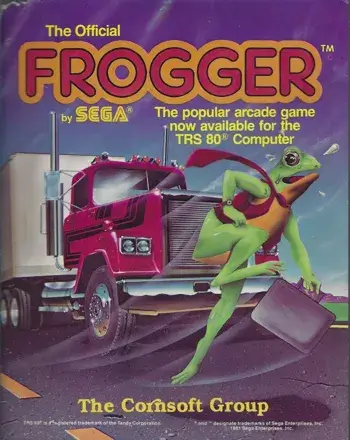
Frogger
atari-2600Action
Frogger is an arcade action game created by Konami and released for the Atari 2600 by Parker Brothers in 1982. The player guides a frog across a hazardous road and a river, aiming to reach safe home spaces at the top of the screen. Its play style is built around short, deliberate movements, timing, and repeated attempts rather than combat or exploration. Traffic, floating logs, turtles, and other hazards create constantly changing routes. The game was widely recognized for translating a simple arcade concept effectively to home consoles and became one of the most recognizable early video games.
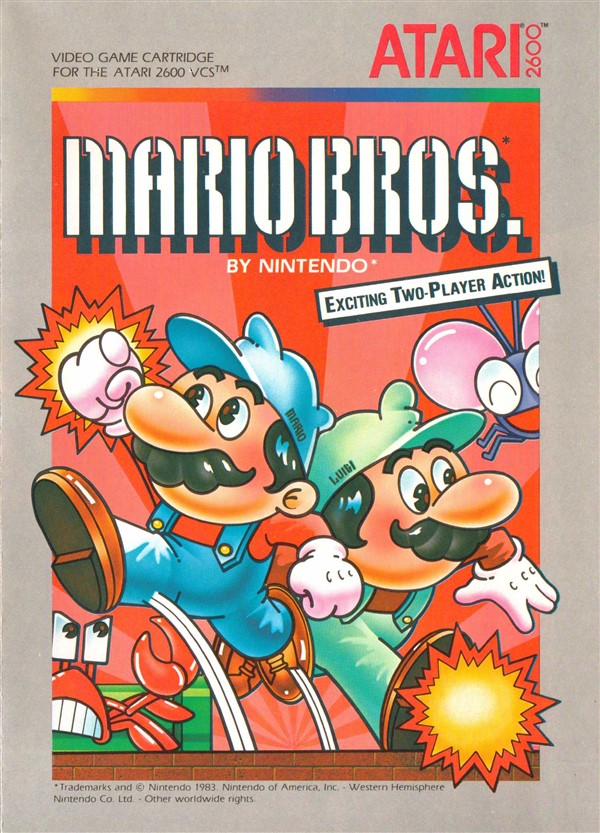
Mario Bros.
atari-2600Action
Mario Bros. is an arcade-style action platform game developed by Nintendo and adapted for the Atari 2600 by Atari. Mario and Luigi work through compact single-screen stages, clearing pipes and defeating creatures that emerge from below. Rather than jumping directly on enemies, players must strike the platforms from underneath to stun them, then touch them to remove them. The Atari 2600 version simplifies the arcade original considerably, but preserves its central timing-based play. Its colorful presentation and two-player option made it a notable early console conversion, although critics and players generally regarded it as technically limited compared with the arcade game.
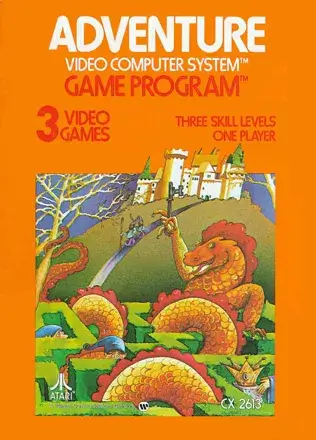
Adventure
atari-2600Action-Adventure
Adventure is a pioneering action-adventure game designed by Warren Robinett and published by Atari for the Atari 2600. It places the player in a compact fantasy world of castles, mazes, keys, bridges, and dragons, with the goal of finding the enchanted chalice and returning it to the golden castle. The game is played from a top-down perspective with simple joystick movement and object handling. Its three difficulty levels vary the maze layouts, item locations, and creature behavior. Adventure was highly influential despite its sparse presentation, and it is widely regarded as one of the earliest console action-adventure games and the source of one of gaming’s first hidden developer credits.
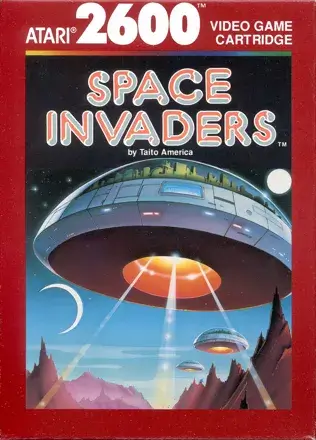
Space Invaders
atari-2600Shoot 'em up
Space Invaders is Atari’s 1980 Atari 2600 adaptation of Taito’s landmark fixed-screen shoot ’em up. The player controls a laser cannon at the bottom of the screen and must destroy successive formations of descending aliens before they reach the ground. Atari programmer Richard Maurer redesigned the arcade game for the console, adding multiple game variations to fit the hardware. Its simple controls, escalating speed, defensive shields, and distinctive sound made it one of the Atari 2600’s defining early releases. Reception was generally strong, although players noted its visual and audio differences from the arcade original. The cartridge helped establish the Atari 2600 as a serious home for arcade-style games.
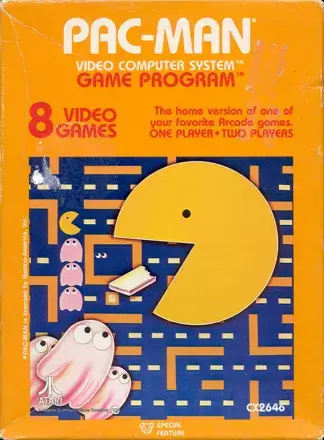
Pac-Man
atari-2600Arcade
Pac-Man is Atari, Inc.'s 1982 Atari 2600 adaptation of Namco's landmark arcade maze-chase game. The player guides Pac-Man through a single-screen maze, eating pellets and fruit while avoiding four ghosts. It is an action game built around route planning, timing, and short repeatable rounds rather than complex controls or inventory systems. The Atari 2600 version was commercially important and became one of the system's best-known releases, but its simplified graphics, sound, and maze presentation were widely criticized compared with the arcade original. It remains historically notable as a major early console adaptation and as a recognizable example of the technical and design compromises of the Atari 2600 era.
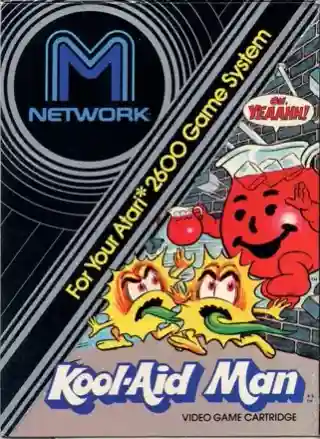
Kool-Aid Man
atari-2600Action
Kool-Aid Man is an action arcade game developed by Mattel Electronics and published by M Network for the Atari 2600 in 1983. The player controls the famous red beverage mascot as he tries to reach thirsty people and deliver Kool-Aid while managing hazards on a single-screen playfield. Its design is built around quick movement, collision avoidance, and repeated attempts to clear the screen efficiently. The licensed premise gives the game a distinctive identity, but the action is simple and highly repetitive by later standards. Reception was mixed: the character attracted attention, while the limited gameplay and promotional nature of the release made it more of a curiosity than a major Atari 2600 classic.
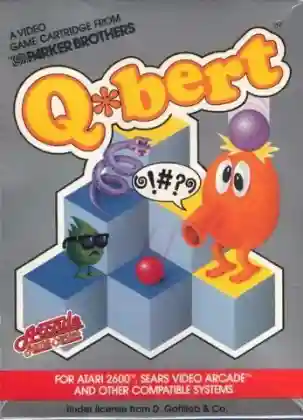
Q*bert
atari-2600Arcade
Q*bert is an arcade action game developed by Gottlieb and adapted for the Atari 2600 by Parker Brothers. The player controls the orange character Q*bert as he hops across an isometric pyramid and changes every cube to a required color. The game is built around short, increasingly difficult rounds rather than exploration or a conventional story. Enemies descend onto the pyramid, while falling from its edges can also cost a life. The Atari 2600 version simplifies the arcade presentation but preserves the distinctive jumping puzzle and enemy-avoidance formula. It was widely recognized as one of the more notable home versions of a popular early-1980s arcade game, although its visuals and sound are necessarily reduced on the console.
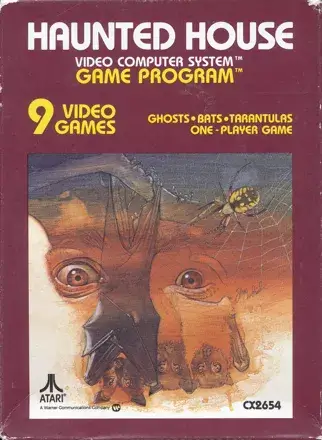
Haunted House
atari-2600Action-Adventure
Haunted House is an Atari 2600 action-adventure game developed and published by Atari, Inc. The player explores a dark, multi-room mansion to recover the three pieces of an ancient urn and escape with the complete artifact. The game uses a top-down view, but visibility is heavily restricted: usually only the player’s eyes and nearby objects can be seen. Keys open the mansion’s locked rooms, while supernatural hazards and roaming creatures make exploration dangerous. Its compact objective, atmospheric darkness, and distinctive visual design made it one of the Atari 2600’s more memorable adventure games. Reception has generally recognized it as an inventive early example of horror-themed console design, despite the system’s technical limitations.
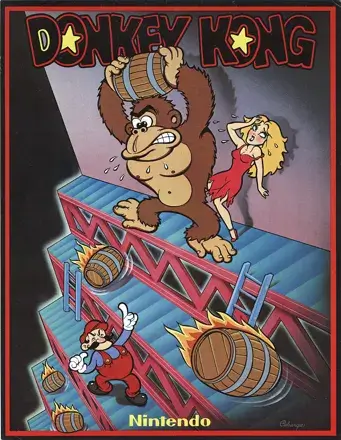
Donkey Kong
atari-2600Platform
Donkey Kong for the Atari 2600 is Coleco’s home-console adaptation of Nintendo’s 1981 arcade platform game. The player controls Mario, originally known as Jumpman, as he climbs construction-site structures to rescue Pauline from Donkey Kong. It combines fixed-screen platforming with timing-based obstacle avoidance, using ladders, platforms, rolling barrels, and other hazards. The conversion preserves the recognizable premise and basic arcade structure, although its simplified graphics, sound, and reduced presentation were widely considered weaker than the arcade original. It remains historically notable as one of the earliest major console versions of a Nintendo arcade hit and as an important early Atari 2600 platform game.
How is this list kept current?
How rankings are calculated
The list is generated from active EmuGamers catalog entries. Votes and play activity determine order; browser compatibility is reported separately and does not turn an untested game into a higher-ranked recommendation.
| Order | Signal | How it is used |
|---|---|---|
| 1 | Real community votes | Games with at least one recorded vote appear before games with no votes. |
| 2 | Rating confidence | More votes rank first, followed by the rating value. |
| 3 | Play activity | Play count breaks rating ties and orders entries with no votes. |
| 4 | Stable tie-break | Game name keeps otherwise equal results deterministic. |
Which sources support further research?
Official sources and catalog provenance
The ranked games come from the EmuGamers database. The links below are related official project updates used for emulator support and preservation context; they are not citations for the ranking order.