
Catalog activity ranking
Most-Played Dragon Quest Games in the EmuGamers Catalog
This page uses active Dragon Quest catalog entries and separates popularity signals from compatibility evidence. This activity ranking links directly to 10 catalog entries in the Dragon Quest collection.
What is the quick answer?
Dragon Quest currently appears first in this activity ranking, followed by Dragon Quest IV: Chapters of the Chosen and Dragon Quest VI: The Land of Illusion. Games with real community ratings are considered first; entries without votes are ordered by play activity. This is a catalog signal, not an independent editorial review.
Most-played Dragon Quest games
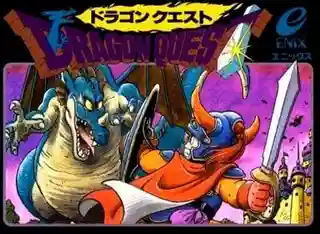
Dragon Quest
Nintendo Entertainment System (NES)Role-Playing Game
Dragon Quest is a fantasy role-playing game developed by Chunsoft and published by Enix. It follows a lone hero who sets out from Tantegel Castle to rescue Princess Gwaelin and defeat the Dragonlord, whose forces have overrun Alefgard. The game uses first-person, menu-driven battles and overhead exploration. Players travel between towns, caves, and castles, gathering equipment, learning spells, and gaining experience through turn-based combat. Originally released in Japan in 1986, it established many conventions associated with console RPGs. Its NES localization, released in North America as Dragon Warrior, was well received for bringing a substantial traditional role-playing experience to the system.
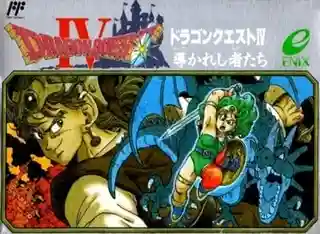
Dragon Quest IV: Chapters of the Chosen
Nintendo Entertainment System (NES)Role-Playing Game
Dragon Quest IV: Chapters of the Chosen is a traditional turn-based role-playing game developed by Chunsoft and published by Enix for the Nintendo Entertainment System. Its story is divided into chapters that first introduce several companions before bringing them together around the silent Hero. Players travel across a fantasy world, visit towns and dungeons, recruit allies, and fight monsters in command-based battles. The chapter structure gives each character a distinct viewpoint and play style, while the later party-based adventure ties the separate stories together. The game was well received for its ambitious narrative design, memorable cast, polished presentation, and accessible mechanics. Its NES release is regarded as one of the system’s notable Japanese RPGs, although the North American version was released under the title Dragon Warrior IV.
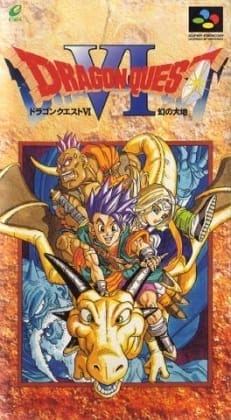
Dragon Quest VI: The Land of Illusion
Super Nintendo (SNES)Role-Playing1995
Dragon Quest VI: The Land of Illusion is a Japanese role-playing game developed by Chunsoft and published by Enix for the Super Nintendo. It follows a young hero who awakens after a failed confrontation with a powerful demon and discovers that the world contains interconnected realities. The adventure combines turn-based battles, exploration, towns, dungeons, character development, and a flexible class system. Its structure is more expansive than earlier entries, with frequent movement between worlds and a large cast of companions. The game was well received in Japan for its scale, atmosphere, music, and systems, although its original release remained unavailable officially in English for many years.
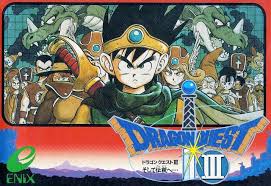
Dragon Quest III: The Seeds of Salvation
Nintendo Entertainment System (NES)Role-Playing Game1988
Dragon Quest III: The Seeds of Salvation is a turn-based Japanese role-playing game developed by Chunsoft and published by Enix for Nintendo’s 8-bit family of consoles. The player takes the role of a young hero who leaves Aliahan to defeat the archfiend Baramos and uncover the fate of the legendary warrior Ortega. A customizable party, class changes, exploration, towns, equipment management, and command-based battles form the core experience. Released in 1988, the game was a major critical and commercial success in Japan. Its expanded world, flexible party system, and connections to the earlier games made it an important milestone for the Dragon Quest series and for console RPG design.
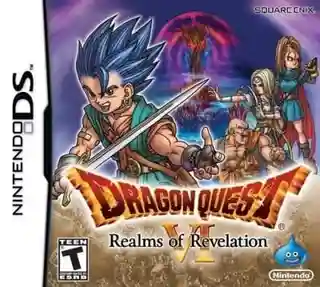
Dragon Quest VI: Realms of Revelation
Nintendo DSRole-Playing2010
Dragon Quest VI: Realms of Revelation is a traditional Japanese role-playing game developed by ArtePiazza and published by Square Enix for Nintendo DS. It follows a young hero who is drawn into a conflict involving two connected worlds, forgotten identities, and the return of a powerful evil. Exploration, town visits, story events, and turn-based battles form the core of the adventure. The Nintendo DS version is a remake of the 1995 Super Famicom game, with redesigned graphics, updated presentation, and the series’ first official English localization. Its class system gives the party broad customization, while its large world and layered narrative emphasize discovery. The remake was generally well received for preserving the original’s scope and mechanics, although some players found the encounter rate and pacing demanding.
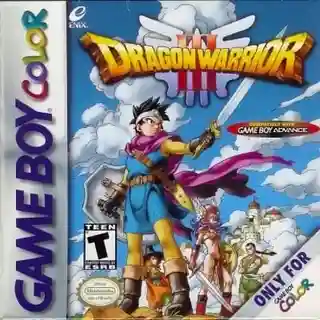
Dragon Warrior III
Game BoyRole-Playing Game
Dragon Warrior III is a traditional Japanese role-playing game developed by Heartbeat and published by Enix for Game Boy Color. It follows a young hero who leaves home on the hero Ortega’s birthday, eventually gathering allies and confronting the archfiend Baramos. The adventure combines overhead exploration, menu-driven turn-based battles, towns, dungeons, vehicles, and class-based party building. This handheld version is an expanded remake of the 1988 Dragon Quest III. It preserves the series’ foundational world structure while adding visual improvements, extra areas, personality-based development, and a substantial post-game challenge. Critics and players generally regard it as one of the strongest role-playing games on the Game Boy Color, although its text-heavy presentation and random encounters require patience.
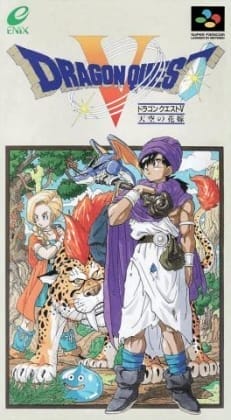
Dragon Quest V: Hand of the Heavenly Bride
Super Nintendo (SNES)Role-Playing Game1992
Dragon Quest V: Hand of the Heavenly Bride is a Japanese role-playing game developed by Chunsoft and published by Enix for the Super Famicom. It follows a hero whose life is shaped by childhood loss, royal intrigue, marriage, and the continuing struggle against an ancient evil. The adventure combines traditional first-person, turn-based battles with exploration, towns, dungeons, and a distinctive monster-recruitment system. Its multigenerational narrative and emotional character writing were widely praised, and the game is often regarded as one of the strongest entries in the Dragon Quest series. The original release remained exclusive to Japan for many years.
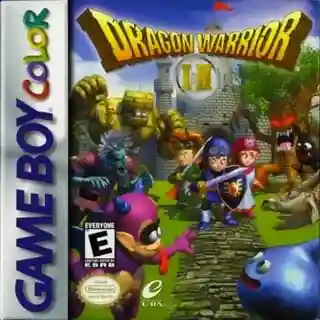
Dragon Warrior I & II
Game BoyRole-Playing Game
Dragon Warrior I & II is a turn-based Japanese role-playing game compilation developed by Chunsoft and published by Enix for the Game Boy Color. It combines two foundational fantasy adventures: a lone hero’s quest to defeat the Dragonlord and a larger party’s campaign against the cult of Hargon and the demon Malroth. Both episodes use overhead exploration, menu-driven battles, towns, dungeons, equipment, experience levels, and treasure hunting. The portable versions add visual and interface improvements over the original releases while retaining their deliberate pacing and traditional structure. The compilation was well received as a convenient, accessible adaptation of two historically important console RPGs.

Dragon Warrior II
Nintendo Entertainment System (NES)Role-Playing Game
Dragon Warrior II is Chunsoft's turn-based role-playing game for the Nintendo Entertainment System, published by Enix. It follows the descendants of the legendary hero as they oppose the sorcerer Hargon and protect the kingdom of Moonbrooke. Unlike its predecessor, the game uses a three-character party, a broader world map, vehicles, and more demanding exploration. Players travel between towns, dungeons, and islands while gathering equipment and uncovering the route to Hargon's stronghold. Its scale and party structure were ambitious for 1987, although the NES version is remembered for uneven difficulty and a punishing final stretch. It remains an important early Dragon Quest sequel.
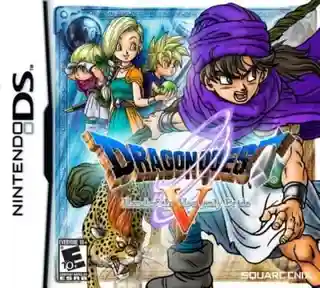
Dragon Quest V: Hand of the Heavenly Bride
Nintendo DSRole-Playing Game2008
Dragon Quest V: Hand of the Heavenly Bride is a traditional Japanese role-playing game developed by ArtePiazza and published by Square Enix for Nintendo DS. It follows an unnamed hero from childhood into adulthood as he searches for his missing mother, confronts the legacy of his father, and builds a family of his own. The game combines turn-based party combat, exploration, dungeon crawling, and monster recruitment. Its family-focused narrative and generational structure were widely praised, while the DS remake was noted for its polished presentation, added party dialogue, and approachable interface. It remains one of the most story-driven entries in the Dragon Quest series.
How is this list kept current?
How rankings are calculated
The list is generated from active EmuGamers catalog entries. Votes and play activity determine order; browser compatibility is reported separately and does not turn an untested game into a higher-ranked recommendation.
| Order | Signal | How it is used |
|---|---|---|
| 1 | Real community votes | Games with at least one recorded vote appear before games with no votes. |
| 2 | Rating confidence | More votes rank first, followed by the rating value. |
| 3 | Play activity | Play count breaks rating ties and orders entries with no votes. |
| 4 | Stable tie-break | Game name keeps otherwise equal results deterministic. |
Which sources support further research?
Official sources and catalog provenance
The ranked games come from the EmuGamers database. The links below are related official project updates used for emulator support and preservation context; they are not citations for the ranking order.