
Catalog activity ranking
Most-Played Puzzle Bobble Games in the EmuGamers Catalog
This page uses active Puzzle Bobble catalog entries and separates popularity signals from compatibility evidence. This activity ranking links directly to 10 catalog entries in the Puzzle Bobble collection.
What is the quick answer?
Puzzle Bobble 2 / Bust-A-Move Again currently appears first in this activity ranking, followed by Puzzle Bobble and Bust-A-Move Pocket. Games with real community ratings are considered first; entries without votes are ordered by play activity. This is a catalog signal, not an independent editorial review.
Most-played Puzzle Bobble games
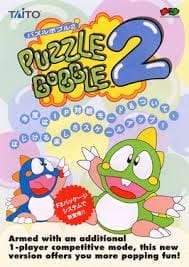
Puzzle Bobble 2 / Bust-A-Move Again
Arcade SystemsPuzzle
Puzzle Bobble 2, released in arcades by Taito in 1995, is a tile-matching puzzle game built around the characters and visual style of Bubble Bobble. Players aim and fire colored bubbles so that groups of three or more matching bubbles burst, clearing formations before they descend too far. The game combines precise aiming with quick tactical decisions, since missed shots can create awkward layouts. Its main arcade campaign supports solo play and competitive two-player play, with staged puzzles and character encounters. The sequel was well received for refining the original formula with more varied formations, stronger presentation, and accessible but increasingly demanding challenges.
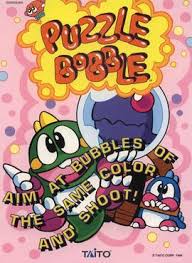
Puzzle Bobble
Arcade SystemsPuzzle
Puzzle Bobble is an arcade puzzle game developed and published by Taito in 1994. It stars Bub and Bob from Bubble Bobble, who use a fixed bubble-shooting device to clear patterns of colored bubbles. The central rule is simple: firing three or more bubbles of the same color together removes them, often causing connected groups to fall. The game combines precise aiming with limited space and steadily changing formations. Its one-player levels provide a focused score-and-clear challenge, while the two-player mode turns efficient clearing into a competitive race. Puzzle Bobble was well received for its approachable rules, satisfying chain reactions, and strong arcade replay value, and it became the foundation of a long-running puzzle series.
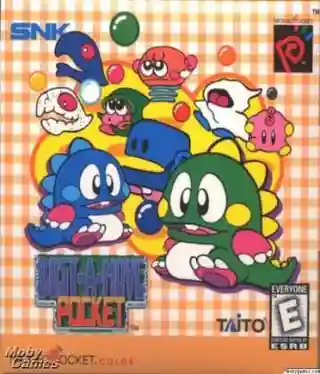
Bust-A-Move Pocket
Neo Geo PocketPuzzle
Bust-A-Move Pocket is a compact arcade puzzle game developed by Taito for the Neo Geo Pocket Color and published by SNK. It adapts the familiar bubble-shooting formula of the Puzzle Bobble series to a handheld format, with players aiming colored bubbles into a crowded playfield and matching groups to remove them. The game emphasizes quick positioning, bank shots, and careful planning rather than long-form exploration. Its small presentation and short stages suit portable play, while the recognizable Bub and Bob theme gives it a clear connection to Taito’s arcade heritage. Reception was generally favorable among handheld puzzle fans, although the reduced screen and simplified presentation make it a smaller-scale version of the arcade experience.
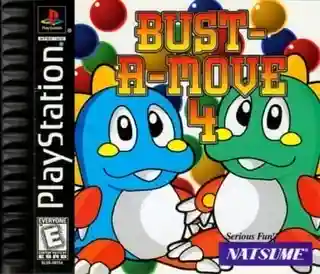
Bust-A-Move 4
psPuzzle
Bust-A-Move 4 is an arcade puzzle game developed by Taito and released for the PlayStation in 1998. Known as Puzzle Bobble 4 in Japan, it follows Bub and Bob as they clear colored bubbles by firing groups from a launcher at the bottom of the screen. The game combines careful aiming, bank shots, color matching, and chain reactions in compact stages. Its main attraction is a structured single-player campaign supported by competitive and cooperative modes. The PlayStation version preserves the quick, readable rules of the arcade series while adding a substantial progression path. It was generally received as a polished continuation for fans of accessible puzzle action.
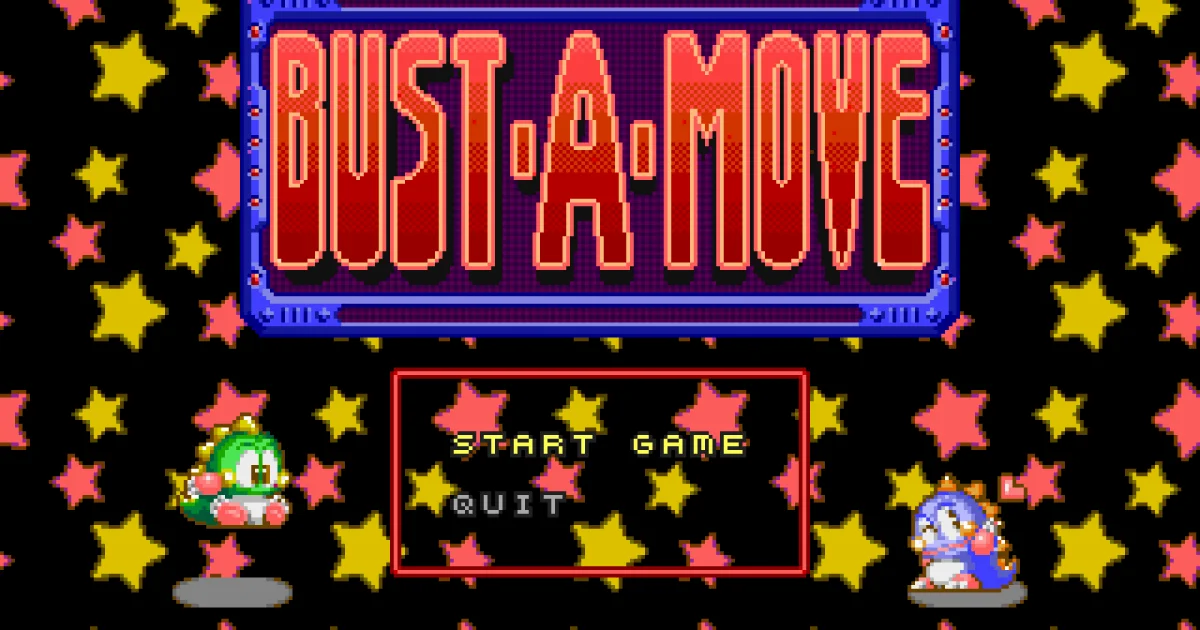
Puzzle Bobble
DOSPuzzle
Puzzle Bobble is a 1994 arcade-style puzzle game developed and published by Taito, with a DOS version that brings its color-matching action to home computers. The player aims bubbles from a launcher and clears groups by attaching three or more bubbles of the same color. Its single-player stages combine careful aiming with rising pressure, while competitive play supports direct matches in versions that include it. The game was well received for turning familiar Bubble Bobble characters and mechanics into an accessible, replayable puzzle format. Its simple rules, quick rounds, and steadily tighter layouts helped establish Puzzle Bobble as a long-running arcade puzzle series.
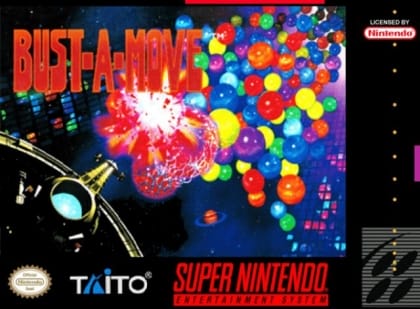
Puzzle Bobble
Super Nintendo (SNES)Puzzle
Puzzle Bobble is a tile-matching puzzle game developed and published by Taito for the Super Nintendo. It stars Bub and Bob, the dragons from Bubble Bobble, who clear fields of colored bubbles by firing matching bubbles from a launcher. The game combines straightforward arcade controls with increasingly demanding layouts, making angle, timing, and color management important. Its main attraction is the focused single-player puzzle progression, complemented by competitive play for two players. The SNES version brought the arcade concept to home consoles with a faithful, accessible adaptation that helped establish Puzzle Bobble as a long-running puzzle series.
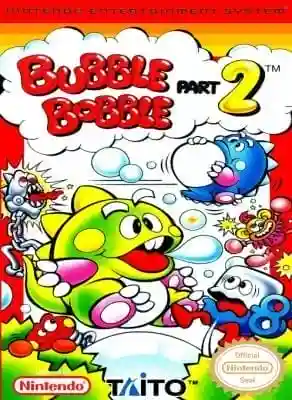
Bubble Bobble Part 2
Nintendo Entertainment System (NES)Platformer
Bubble Bobble Part 2 is a single-screen platform game developed by Natsume and published by Taito for the Nintendo Entertainment System. It continues the bubble-blowing arcade formula with Bub and Bob, two dragons who must clear successive rooms by trapping enemies in bubbles and bursting them. Each stage is built around compact platforms, hazards, enemy movement, and collectible items rather than scrolling exploration. The game supports one or two players and emphasizes cooperation, quick positioning, and efficient room clearing. Compared with the original arcade game, this NES sequel is a distinct console production with its own stages and presentation. It received generally favorable attention for preserving the series’ accessible action while adding a large set of new levels.
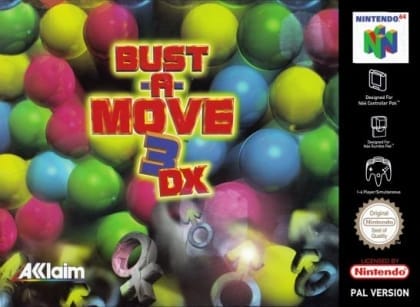
Bust-A-Move 3 DX
Nintendo 64Puzzle
Bust-A-Move 3 DX is a color-matching action puzzle game developed and published by Taito for the Nintendo 64. Known as Puzzle Bobble 3DX in Japan, it follows Bub and Bob as they clear formations of colored bubbles by firing matching bubbles from a launcher. The game combines arcade-style timing with deliberate planning, since shots can bounce off the side walls and missed bubbles can make later stages much harder. Its main attraction is a broad collection of puzzle rounds, supported by competitive and cooperative play depending on the selected mode. The Nintendo 64 version brought Taito's established arcade formula to a home console with colorful presentation and accessible controls. Reception generally valued its faithful, addictive mechanics, although the core formula remained intentionally familiar rather than radically different from earlier entries.
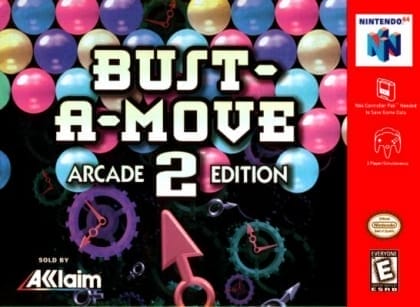
Bust-A-Move 2: Arcade Edition
Nintendo 64Puzzle
Bust-A-Move 2: Arcade Edition is a tile-matching puzzle game developed by Taito and released for Nintendo 64 in 1996. It is the home-console version of the arcade sequel to Puzzle Bobble, with Bub and Bob firing colored bubbles into formations suspended above the playfield. The central idea is simple: match three or more bubbles of the same color to remove them, while clearing connected groups that lose their support. The game combines careful aiming with time pressure and increasingly awkward layouts. Its faithful arcade-style play and accessible rules made it a well-regarded multiplayer and solo puzzle title, although the Nintendo 64 edition is best understood as a conversion rather than a radically expanded remake.
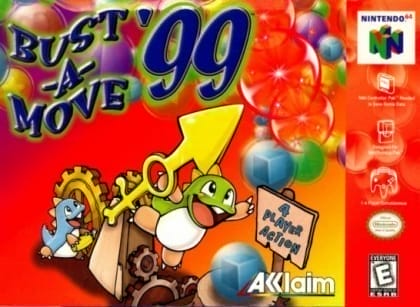
Bust-A-Move '99
Nintendo 64Puzzle
Bust-A-Move '99 is a competitive arcade puzzle game developed by Taito for the Nintendo 64 and published in the West by Acclaim Entertainment. It is part of the Puzzle Bobble series, built around firing colored bubbles into a rising arrangement and matching three or more of the same color. The game supports traditional solo challenges as well as head-to-head play, with simple controls that make it easy to start but difficult to master. Its presentation retains the bright characters and cheerful style associated with the arcade originals. Reception focused on the familiar, addictive puzzle formula and the value of multiplayer, although the game was also seen as a relatively conservative Nintendo 64 adaptation rather than a major reinvention.
How is this list kept current?
How rankings are calculated
The list is generated from active EmuGamers catalog entries. Votes and play activity determine order; browser compatibility is reported separately and does not turn an untested game into a higher-ranked recommendation.
| Order | Signal | How it is used |
|---|---|---|
| 1 | Real community votes | Games with at least one recorded vote appear before games with no votes. |
| 2 | Rating confidence | More votes rank first, followed by the rating value. |
| 3 | Play activity | Play count breaks rating ties and orders entries with no votes. |
| 4 | Stable tie-break | Game name keeps otherwise equal results deterministic. |
Which sources support further research?
Official sources and catalog provenance
The ranked games come from the EmuGamers database. The links below are related official project updates used for emulator support and preservation context; they are not citations for the ranking order.