
Catalog activity ranking
Most-Played Klonoa Games in the EmuGamers Catalog
This page uses active Klonoa catalog entries and separates popularity signals from compatibility evidence. This activity ranking links directly to 7 catalog entries in the Klonoa collection.
What is the quick answer?
Klonoa Beach Volley: Saikyou Team Kettei-sen! currently appears first in this activity ranking, followed by Klonoa Heroes: Legend of the Star Medal and Klonoa 2: Dream Champ Tournament. Games with real community ratings are considered first; entries without votes are ordered by play activity. This is a catalog signal, not an independent editorial review.
Most-played Klonoa games
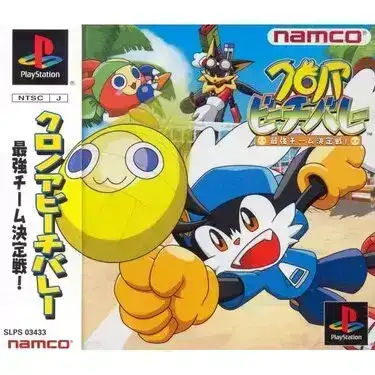
Klonoa Beach Volley: Saikyou Team Kettei-sen!
psSports
Klonoa Beach Volley: Saikyou Team Kettei-sen! is a competitive beach-volleyball game developed and published by Namco for the original PlayStation. It places Klonoa and other characters from the series into two-on-two matches rather than the platforming adventures associated with the franchise. Players position their team, return the ball, and use timing and teamwork to win points across short matches. The game was released in Japan in 2002 as a character-driven sports spin-off. Its appeal comes from accessible arcade-style play, colorful presentation, and the chance to see familiar Klonoa characters in a different genre, although its limited release makes it less widely known than the main games.
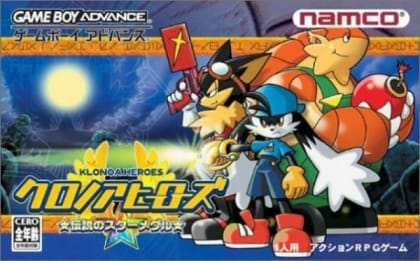
Klonoa Heroes: Legend of the Star Medal
Game Boy AdvanceAction RPG2002
Klonoa Heroes: Legend of the Star Medal is an action role-playing game developed and published by Namco for the Game Boy Advance. It follows Klonoa, Guntz, and Pango as they investigate a mysterious threat connected to the Star Medal. The game combines overhead exploration, real-time combat, item collection, and light puzzle solving rather than using the side-scrolling structure of the main Klonoa adventures. Players can switch between the three heroes, each with different strengths, while traveling through towns, fields, dungeons, and story-driven encounters. Released in Japan in 2002, it remained a Japan-exclusive title and received less international attention than the series’ console platformers, but it is notable for expanding Klonoa into a compact RPG format.
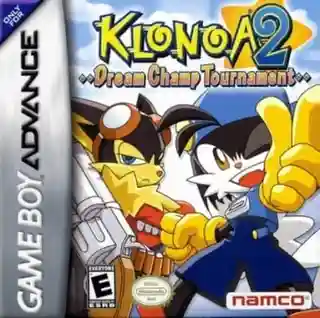
Klonoa 2: Dream Champ Tournament
Game Boy AdvancePlatformer
Klonoa 2: Dream Champ Tournament is a side-scrolling platform game developed and published by Namco for the Game Boy Advance. Klonoa enters a dream-world competition in which he must clear obstacle courses, defeat enemies, and collect items across compact stages. The game combines traditional running and jumping with Klonoa’s Wind Bullet, allowing him to capture enemies and use them to attack, solve puzzles, or reach higher platforms. Its focused level design suits short handheld sessions while still rewarding exploration. Reception generally recognized its colorful presentation, inventive mechanics, and faithful adaptation of Klonoa’s character, although the smaller GBA format makes the experience more straightforward than the series’ larger console entries.
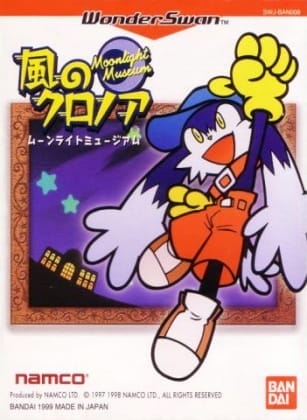
Kaze no Klonoa: Moonlight Museum
Bandai WonderSwanPuzzle-platformer
Kaze no Klonoa: Moonlight Museum is a puzzle-platform game developed and published by Namco for the Bandai WonderSwan in 1999. It adapts Klonoa’s signature wind-based actions to a compact monochrome handheld format, with an emphasis on solving environmental puzzles rather than simply reaching the end of a stage. Klonoa explores a mysterious museum and its themed rooms while dealing with enemies, switches, hazards, and carefully arranged platforms. The game is a side story in the Klonoa series and is notable as the first Klonoa title released for a handheld system. Its specialized controls, inventive room layouts, and rarity have earned it a distinctive reputation among series collectors, although its Japanese-only release limited its audience outside Japan.
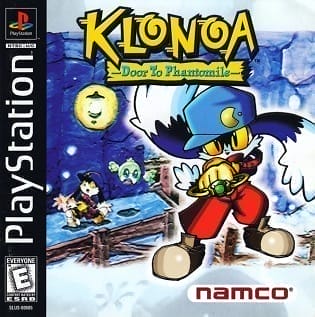
Klonoa: Door to Phantomile
psPlatformer
Klonoa: Door to Phantomile is a 2.5D action-platformer developed and published by Namco for the original PlayStation. The player controls Klonoa, a cat-like Dream Traveler who investigates mysterious events affecting the dream world of Phantomile. Its stages combine side-scrolling movement with polygonal environments, environmental puzzles, collectible Vision fragments, and enemy-based abilities. Klonoa captures enemies with the Wind Bullet and uses them to attack, solve puzzles, and reach higher areas. The game was well received for its inventive mechanics, expressive presentation, memorable music, and unusual blend of 2D platforming with 3D visuals.
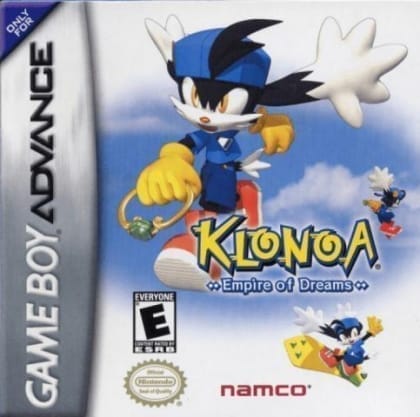
Klonoa: Empire of Dreams
Game Boy AdvancePlatformer
Klonoa: Empire of Dreams is a side-scrolling platformer with puzzle-focused level design, developed and published by Namco for the Game Boy Advance. It follows Klonoa as he enters the Empire of Dreams and works to recover his lost ability to dream. The game combines traditional jumping with Klonoa’s Wind Bullet, which captures enemies so they can be thrown or used for extra jumps. Its stages emphasize careful positioning, collectible gathering, and compact environmental puzzles rather than continuous combat. The colorful presentation and inventive mechanics were generally well received, especially for bringing the Klonoa formula to a handheld, although its shorter structure and simpler presentation distinguish it from the console entries.
Klonoa: Empire of Dreams
Game Boy AdvancePlatformer
Klonoa: Empire of Dreams is a side-scrolling puzzle-platformer developed and published by Namco for the Game Boy Advance. Klonoa is summoned to the Empire of Dreams after the king banishes him for possessing the forbidden power to dream. Across colorful stages, he runs, jumps, captures enemies, and uses them to solve environmental puzzles. The game combines traditional platforming with carefully arranged challenges involving switches, blocks, moving platforms, and enemy throws. It was generally well received for translating Klonoa’s distinctive mechanics to a handheld format, with reviewers especially noting its polished presentation and inventive level design.
How is this list kept current?
How rankings are calculated
The list is generated from active EmuGamers catalog entries. Votes and play activity determine order; browser compatibility is reported separately and does not turn an untested game into a higher-ranked recommendation.
| Order | Signal | How it is used |
|---|---|---|
| 1 | Real community votes | Games with at least one recorded vote appear before games with no votes. |
| 2 | Rating confidence | More votes rank first, followed by the rating value. |
| 3 | Play activity | Play count breaks rating ties and orders entries with no votes. |
| 4 | Stable tie-break | Game name keeps otherwise equal results deterministic. |
Which sources support further research?
Official sources and catalog provenance
The ranked games come from the EmuGamers database. The links below are related official project updates used for emulator support and preservation context; they are not citations for the ranking order.