
Catalog activity ranking
Most-Played Mario Games in the EmuGamers Catalog
This page uses active Mario catalog entries and separates popularity signals from compatibility evidence. This activity ranking links directly to 10 catalog entries in the Mario collection.
What is the quick answer?
Mario & Wario currently appears first in this activity ranking, followed by Mario's Time Machine and Yoshi's Safari. Games with real community ratings are considered first; entries without votes are ordered by play activity. This is a catalog signal, not an independent editorial review.
Most-played Mario games
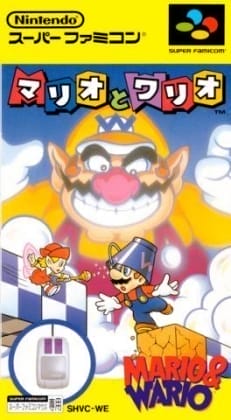
Mario & Wario
Super Nintendo (SNES)Puzzle
Mario & Wario is a puzzle-action game developed by Game Freak and published by Nintendo for the Super Famicom in 1993. Wario places buckets and other objects over Mario’s head, leaving him unable to see, while the player guides the fairy Wanda through obstacle-filled stages. The game is designed for the Super Nintendo Mouse, which gives its movement and timing challenges a distinctive feel compared with conventional Mario games. Each stage combines route planning, quick reactions, and environmental hazards. Luigi and Princess Peach also appear as playable targets in different circumstances. The game received attention for its unusual mouse-based control scheme and playful presentation, although its specialized peripheral limited its audience outside Japan. It remains a notable experimental Mario spin-off from the 16-bit era.
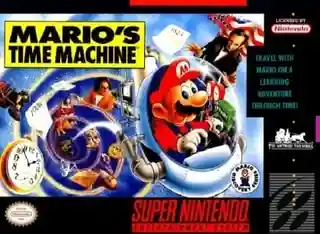
Mario's Time Machine
Super Nintendo (SNES)Educational
Mario's Time Machine is an educational adventure game developed by The Software Toolworks and published by Nintendo for the Super Nintendo Entertainment System. Bowser has stolen artifacts from different periods of history, and Mario must travel through time to return them. The game combines light platforming and exploration with historical reading, object identification, and quiz sections. Its play style is slower and more instructional than a traditional Mario action game, with progress depending on learning and answering questions. Reception was mixed: its unusual educational format and historical material appealed to some younger players, while critics often found the pacing and limited action less engaging than the mainline series.
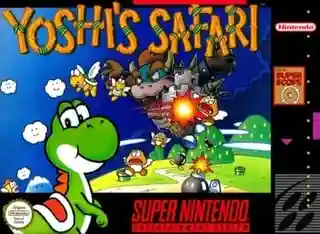
Yoshi's Safari
Super Nintendo (SNES)Rail Shooter
Yoshi's Safari is a 1993 Super Nintendo light-gun rail shooter developed by Nintendo EAD and published by Nintendo. The player controls Mario from a first-person viewpoint while Yoshi carries him through Jewelry Land, where Bowser and the Koopalings have stolen twelve valuable jewels. Designed for the Super Scope, the game combines rapid aiming with a colorful, side-scrolling route structure. Players shoot enemies, defeat bosses, and help restore the kingdom rather than freely exploring levels. Its unusual hardware requirement made it less widely played than standard Mario adventures, but contemporary and later commentary has often recognized its responsive shooting, bright presentation, and distinctive place in Nintendo's 16-bit library.
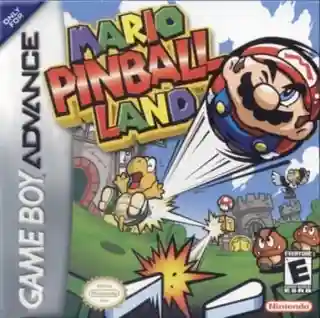
Mario Pinball Land
Game Boy AdvancePinball
Mario Pinball Land is a pinball-action game developed by Fuse Games and published by Nintendo for the Game Boy Advance. It combines traditional table play with a light adventure structure: Mario is transformed into a living pinball and travels through themed tables while trying to rescue Princess Peach from Bowser. Players use flippers, bumpers, ramps, and table hazards to guide Mario, defeat enemies, and reach new areas. The game was notable for adapting familiar Mario characters and locations to a pinball format rather than using conventional platforming. Reception was generally mixed, with praise for its distinctive presentation and accessible concept, but criticism for repetitive table objectives and limited depth compared with larger Mario adventures.
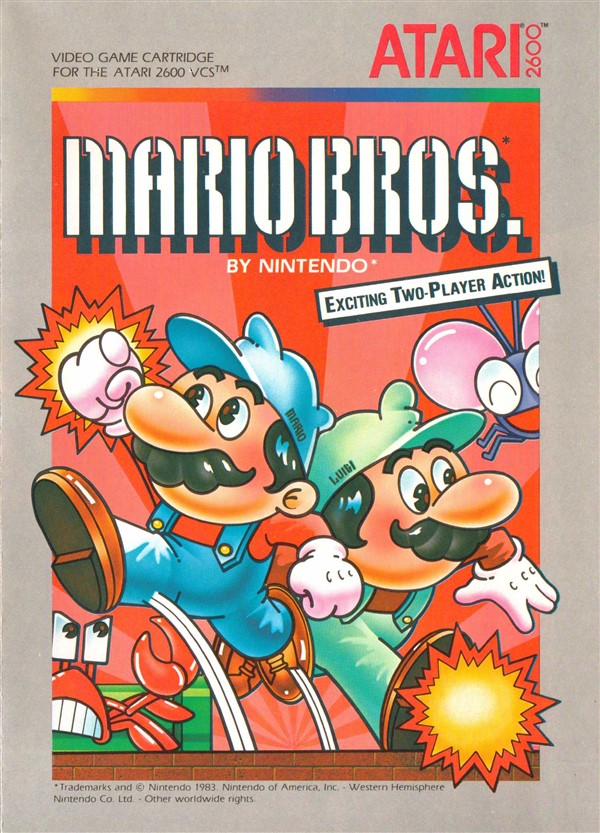
Mario Bros.
atari-2600Action
Mario Bros. is an arcade-style action platform game developed by Nintendo and adapted for the Atari 2600 by Atari. Mario and Luigi work through compact single-screen stages, clearing pipes and defeating creatures that emerge from below. Rather than jumping directly on enemies, players must strike the platforms from underneath to stun them, then touch them to remove them. The Atari 2600 version simplifies the arcade original considerably, but preserves its central timing-based play. Its colorful presentation and two-player option made it a notable early console conversion, although critics and players generally regarded it as technically limited compared with the arcade game.
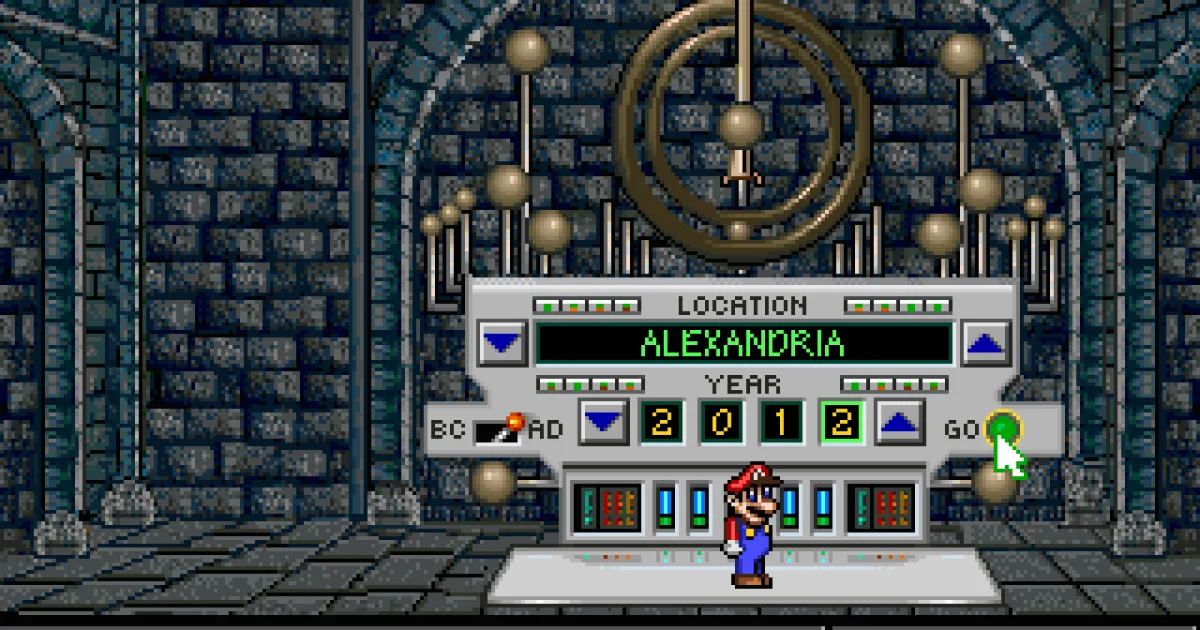
Mario's Time Machine
DOSEducational
Mario's Time Machine is an educational adventure game developed by The Software Toolworks and published by Nintendo for DOS in 1993. Bowser has stolen important historical artifacts and scattered them across different periods of world history, leaving Mario to recover them. The game combines light exploration, an encyclopedia-style information system, historical questions, and simple arcade sequences rather than traditional platforming. Its play style is deliberately instructional, presenting facts about figures, places, and events as part of the adventure. Reception was mixed: the concept and reference material were viewed as useful for younger players, while critics often found the puzzles, controls, and presentation basic compared with other Mario games.
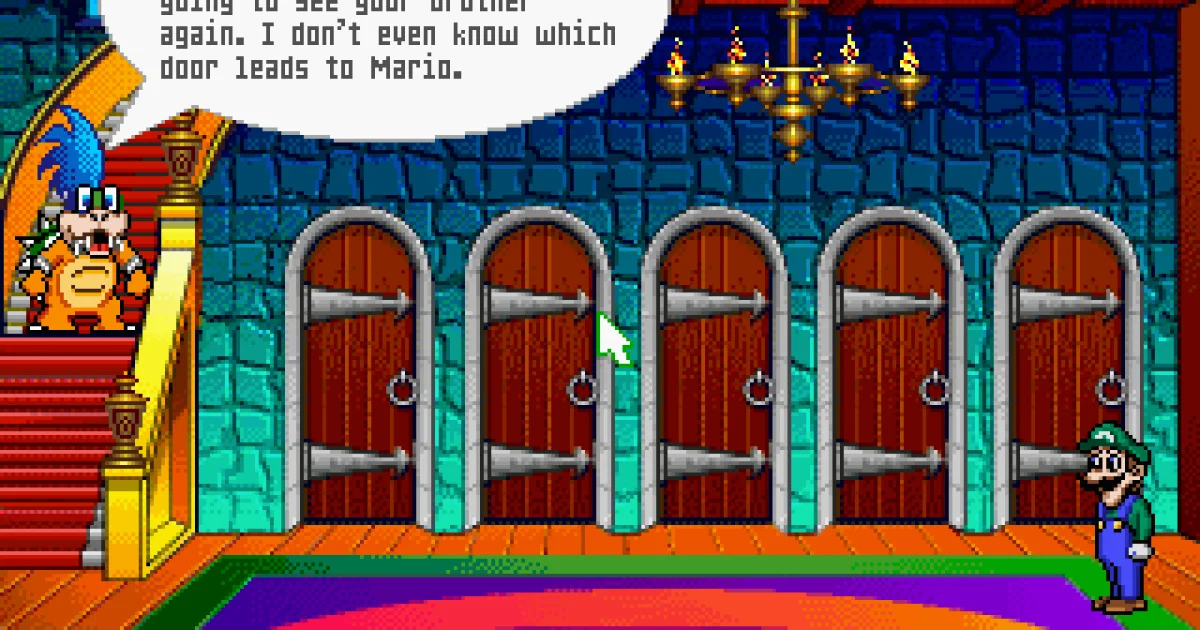
Mario is Missing!
DOSEducational
Mario is Missing! is an educational adventure game developed by The Software Toolworks and published by Nintendo for DOS. When Bowser steals landmarks and artifacts from around the world, Luigi must travel between international cities, investigate clues, and recover them while searching for Mario. The game combines point-and-click-style exploration, geography lessons, trivia, and light puzzle solving rather than traditional platforming. Its accessible format was aimed primarily at younger players and families. Reception was mixed: the educational content and colorful presentation were often recognized, while the slow pace and limited challenge received criticism from players expecting a conventional Mario game.
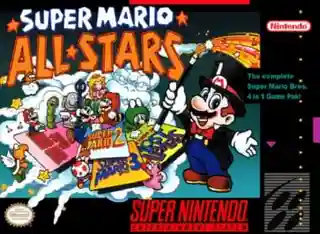
Super Mario All-Stars
Super Nintendo (SNES)Platformer
Super Mario All-Stars is a Nintendo compilation for the Super Nintendo Entertainment System that brings together four updated 2D platform games: Super Mario Bros., Super Mario Bros. 2, Super Mario Bros. 3, and Super Mario Bros.: The Lost Levels. Nintendo R&D4 rebuilt the earlier NES games with redesigned graphics, enhanced sound, and battery-backed save features. Players guide Mario, Luigi, or other available characters through obstacle-filled stages, collecting power-ups and defeating enemies. The collection was widely praised for its polished presentation, faithful gameplay, and convenient way to experience several landmark Mario adventures in one package. Its difficulty and handling vary noticeably between the included games.
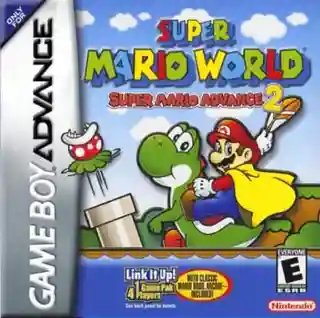
Super Mario World: Super Mario Advance 2
Game Boy AdvancePlatformer
Super Mario World: Super Mario Advance 2 is a side-scrolling platform game developed and published by Nintendo for the Game Boy Advance. It adapts the 1990 Super Nintendo classic, following Mario and Luigi as they travel across Dinosaur Land to rescue Princess Peach and defeat Bowser. The game combines precise running and jumping with power-ups, secret exits, switch palaces, and Yoshi riding. Its portable presentation preserves the original’s broad world map and varied level design while adding quality-of-life changes and playable Luigi. Critics and players generally regarded it as one of the strongest handheld versions of a classic Mario adventure, although some audio and visual changes were debated.
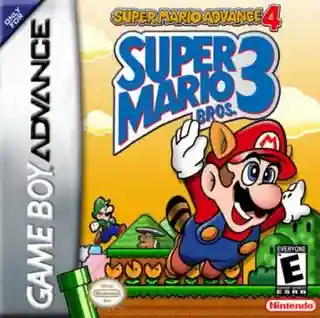
Super Mario Advance 4: Super Mario Bros. 3
Game Boy AdvancePlatformer
Super Mario Advance 4: Super Mario Bros. 3 is a side-scrolling platform game developed and published by Nintendo for the Game Boy Advance. It adapts the NES classic Super Mario Bros. 3 with updated graphics, expanded sound, voice samples, and additional content linked to the Nintendo e-Reader in compatible regions. Players guide Mario or Luigi through the Mushroom World to rescue Princess Peach from Bowser and his minions. The game combines traditional obstacle-course platforming with a world map, power-ups, hidden routes, and varied stage themes. It was generally well received for preserving the original game while adding portable enhancements and optional content.
How is this list kept current?
How rankings are calculated
The list is generated from active EmuGamers catalog entries. Votes and play activity determine order; browser compatibility is reported separately and does not turn an untested game into a higher-ranked recommendation.
| Order | Signal | How it is used |
|---|---|---|
| 1 | Real community votes | Games with at least one recorded vote appear before games with no votes. |
| 2 | Rating confidence | More votes rank first, followed by the rating value. |
| 3 | Play activity | Play count breaks rating ties and orders entries with no votes. |
| 4 | Stable tie-break | Game name keeps otherwise equal results deterministic. |
Which sources support further research?
Official sources and catalog provenance
The ranked games come from the EmuGamers database. The links below are related official project updates used for emulator support and preservation context; they are not citations for the ranking order.