
Catalog activity ranking
Most-Played Tomb Raider Games in the EmuGamers Catalog
This page uses active Tomb Raider catalog entries and separates popularity signals from compatibility evidence. This activity ranking links directly to 10 catalog entries in the Tomb Raider collection.
What is the quick answer?
Tomb Raider II currently appears first in this activity ranking, followed by Tomb Raider: Curse of the Sword and Tomb Raider. Games with real community ratings are considered first; entries without votes are ordered by play activity. This is a catalog signal, not an independent editorial review.
Most-played Tomb Raider games
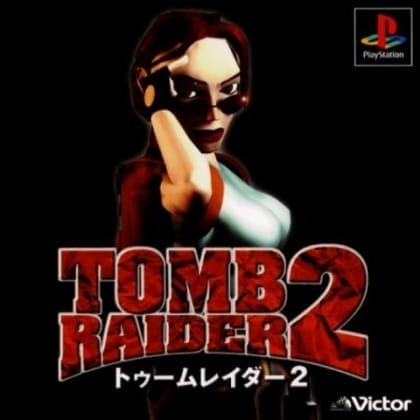
Tomb Raider II
psAction-Adventure
Tomb Raider II is a third-person action-adventure game developed by Core Design and published by Eidos Interactive for PlayStation. It follows Lara Croft as she searches for the Dagger of Xian, an ancient artifact believed to grant the power of a dragon. Exploration, environmental puzzles, platforming, swimming, and armed combat form the central play style. The campaign travels through locations including Venice, Tibet, coastal regions, and China, giving the sequel a broader setting than its predecessor. It was commercially successful and generally well received for expanding Lara’s movement options, environments, and weapon selection, although some critics found its difficulty and combat uneven.
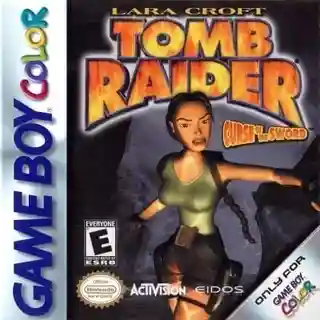
Tomb Raider: Curse of the Sword
Game BoyAction-Adventure
Tomb Raider: Curse of the Sword is a side-scrolling action-adventure game developed by Core Design and published by Eidos Interactive for the Game Boy Color in 2001. It stars archaeologist Lara Croft, who becomes linked to a cursed sword and must investigate supernatural events while searching for a way to break the curse. The game adapts Tomb Raider’s exploration and combat ideas to a compact handheld format. Lara runs, jumps, climbs, shoots, collects items, and solves environmental puzzles across themed stages. Contemporary reception recognized its attempt to bring the franchise to Game Boy Color, although reviews commonly noted simplified mechanics, uneven controls, and technical limitations compared with the console games.
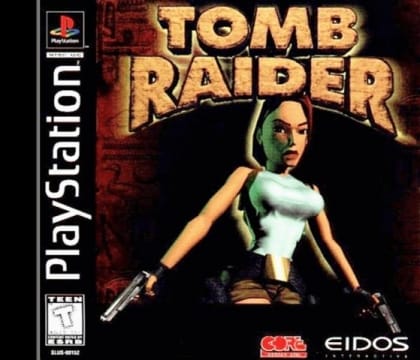
Tomb Raider
psAction-Adventure
Tomb Raider is a 1996 action-adventure game developed by Core Design and published by Eidos Interactive for PlayStation. It follows archaeologist Lara Croft as she searches for the legendary Scion artifact across ancient ruins, underground tombs, and dangerous wilderness. The game combines third-person exploration, environmental puzzles, precision platforming, and combat against animals and hostile characters. Its large 3D spaces, acrobatic movement, and atmospheric ruins made it one of the most influential console adventure games of its era. Reviews praised its ambitious world design, distinctive protagonist, and sense of exploration, although the camera and controls were frequently criticized. It became a major commercial success and established Tomb Raider as a prominent long-running game series.
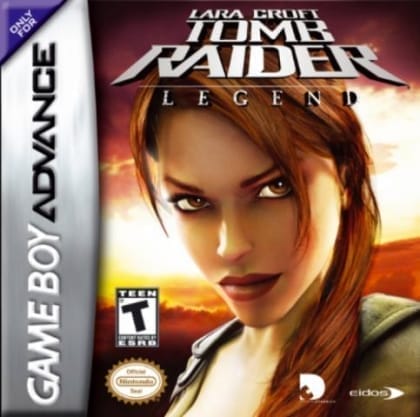
Lara Croft: Tomb Raider - Legend
Game Boy AdvanceAction
Lara Croft: Tomb Raider - Legend for Game Boy Advance is a 2D action-platform adventure developed by Human Soft and published by Eidos Interactive. It adapts the core premise of the console game: Lara investigates clues connected to an ancient artifact while traveling through hazardous ruins and modern locations. The handheld version uses side-scrolling exploration instead of the console release’s third-person 3D presentation. Lara runs, jumps, climbs, fights enemies, and searches for routes through compact stages. Reception was shaped by the limitations of the GBA conversion; it preserves the recognizable Tomb Raider setting and character, but offers a simpler interpretation of Legend’s exploration and set pieces.
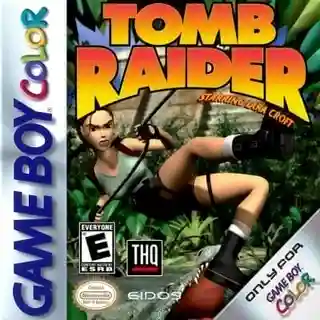
Tomb Raider
Game BoyAction
Tomb Raider on Game Boy Color is a side-scrolling action-platformer developed by Core Design and published by Eidos Interactive. It adapts Lara Croft’s archaeological adventures to Nintendo’s handheld hardware, replacing the main series’ polygonal third-person exploration with compact stages, ladders, ledges, traps, switches, and direct combat. Players guide Lara through ancient ruins while searching for routes, artifacts, and objectives. The game emphasizes careful movement and platforming more than the large, open environments of its console counterparts. Its reception was generally mixed: reviewers appreciated the attempt to translate the recognizable character and structure to Game Boy Color, but criticized the limited presentation and sometimes awkward controls. It remains a notable handheld interpretation of the franchise.
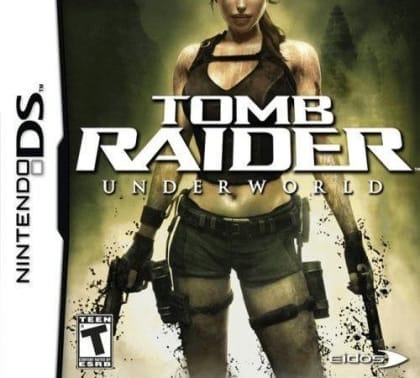
Tomb Raider: Underworld
Nintendo DSAction-Adventure
Tomb Raider: Underworld is an action-adventure platformer developed by Santa Cruz Games for Nintendo DS and published by Eidos Interactive. It adapts Lara Croft’s search for clues connected to Norse mythology, ancient ruins, and the disappearance of her mother. The DS edition is a substantially redesigned handheld game rather than a direct technical conversion of the console versions, combining exploration, environmental puzzles, platforming, and combat. Lara travels through hazardous archaeological locations, using weapons, movement abilities, and equipment to progress. Its compact structure and touch-screen-oriented presentation fit the hardware, although reception was mixed compared with the larger versions because of its simplified design and different perspective.
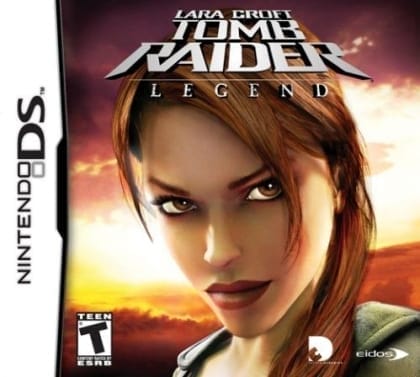
Lara Croft Tomb Raider: Legend
Nintendo DSAction-Adventure
Lara Croft Tomb Raider: Legend is an action-adventure platformer developed by Human Soft for Nintendo DS and published by Eidos Interactive. It reworks the console game into a compact handheld experience built around side-scrolling and room-based exploration, environmental puzzles, traps, and combat. Lara searches for clues connected to the legendary sword Excalibur while investigating the disappearance of her mother. The DS edition received a mixed-to-positive historical response: critics generally appreciated its ambition, touch-screen features, and faithful themes, while noting that its structure and presentation differ substantially from the console versions.
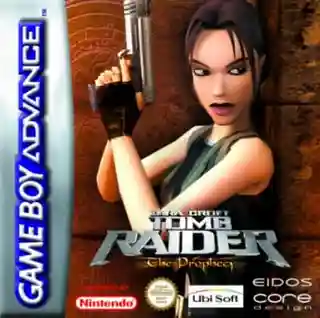
Tomb Raider: The Prophecy
Game Boy AdvanceAction-Adventure
Tomb Raider: The Prophecy is an action-adventure game developed by Ubisoft Milan and published by Ubisoft for the Game Boy Advance. It follows Lara Croft as she investigates an ancient prophecy and searches for powerful artifacts while confronting supernatural enemies and rival factions. The game presents its environments from an isometric perspective rather than using the fully 3D viewpoint of the main console entries. Exploration, combat, environmental puzzles, and platforming are combined across a sequence of self-contained areas. Its use of prerendered visual elements and a darker tone made it an ambitious handheld interpretation of Tomb Raider, although contemporary reception was mixed, with praise for its presentation and criticism of its limited controls and repetitive combat.
Tomb Raider
DOSAction-Adventure
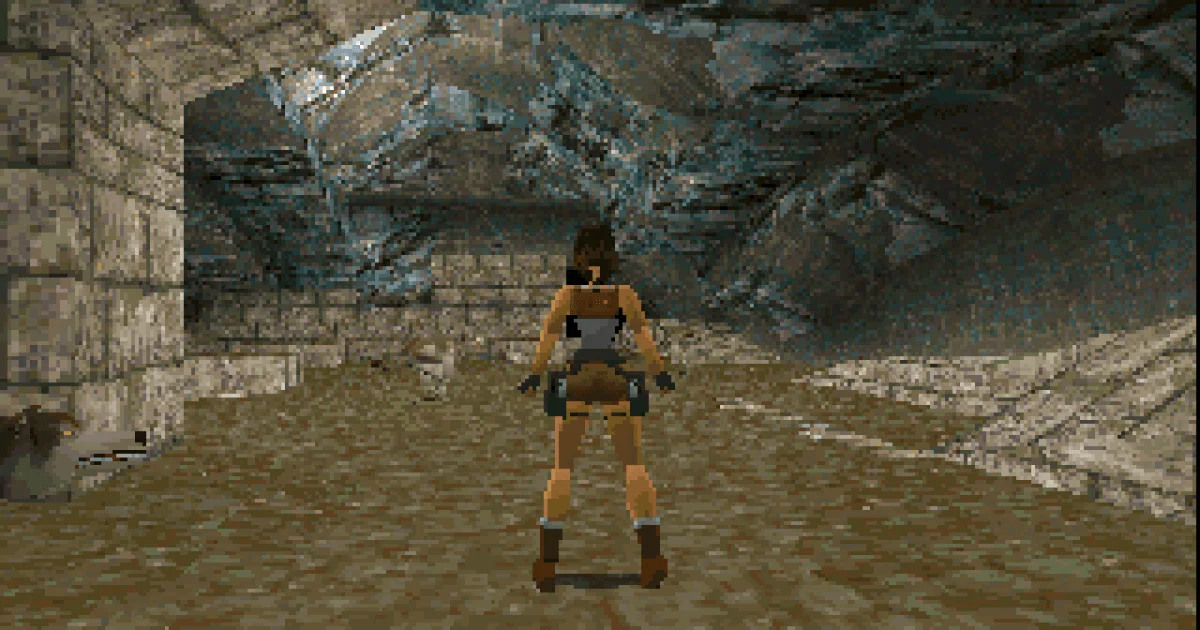
Tomb Raider is a 1996 action-adventure game developed by Core Design and published by Eidos Interactive for DOS. It follows archaeologist Lara Croft as she searches ancient ruins for the Scion, an artifact connected to lost civilizations and dangerous rivals. The game combines third-person exploration, platforming, environmental puzzles, and deliberate gunplay across large, labyrinthine stages. Its distinctive acrobatic movement and atmospheric tombs helped establish Lara Croft as one of the most recognizable characters in games. Critics and players widely praised its ambitious 3D environments, exploration, and sense of scale, although the fixed camera and difficult controls could be frustrating.
Lara Croft Tomb Raider: The Prophecy
Game Boy AdvanceAction-Adventure
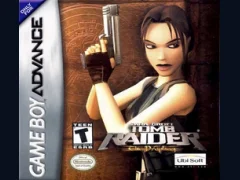
Lara Croft Tomb Raider: The Prophecy is a 2002 Game Boy Advance action-adventure game developed by Ubisoft Milan and published by Ubisoft. It presents Lara in a top-down, isometric-style view as she investigates an ancient prophecy and searches for powerful artifacts. Exploration, combat, environmental puzzles, and trap navigation form the core of the experience, while the portable format divides the adventure into compact areas and stages. The game adapts Tomb Raider ideas to the GBA rather than attempting to reproduce the console games directly. Contemporary reception generally regarded it as a competent portable spin-off, with praise for its atmosphere and recognizable premise, but its simplified presentation and more limited exploration kept it below the series' major entries.
How is this list kept current?
How rankings are calculated
The list is generated from active EmuGamers catalog entries. Votes and play activity determine order; browser compatibility is reported separately and does not turn an untested game into a higher-ranked recommendation.
| Order | Signal | How it is used |
|---|---|---|
| 1 | Real community votes | Games with at least one recorded vote appear before games with no votes. |
| 2 | Rating confidence | More votes rank first, followed by the rating value. |
| 3 | Play activity | Play count breaks rating ties and orders entries with no votes. |
| 4 | Stable tie-break | Game name keeps otherwise equal results deterministic. |
Which sources support further research?
Official sources and catalog provenance
The ranked games come from the EmuGamers database. The links below are related official project updates used for emulator support and preservation context; they are not citations for the ranking order.