
Catalog activity ranking
Most-Played Donkey Kong Games in the EmuGamers Catalog
This page uses active Donkey Kong catalog entries and separates popularity signals from compatibility evidence. This activity ranking links directly to 10 catalog entries in the Donkey Kong collection.
What is the quick answer?
Donkey Kong currently appears first in this activity ranking, followed by Donkey Kong Jr. and Donkey Kong 3. Games with real community ratings are considered first; entries without votes are ordered by play activity. This is a catalog signal, not an independent editorial review.
Most-played Donkey Kong games
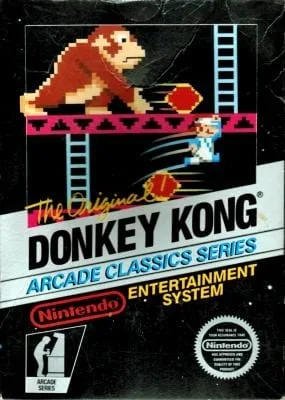
Donkey Kong
Nintendo Entertainment System (NES)Arcade
Donkey Kong is an arcade-style platform game developed by Nintendo R&D1 and published by Nintendo for the Nintendo Entertainment System. The player controls Mario, originally known as Jumpman, while he climbs construction-site stages to rescue Pauline from Donkey Kong. Its compact single-screen layouts emphasize timing, jumping, ladder use, and hazard avoidance rather than exploration. The NES version adapts the original arcade concept into four main stage layouts and supports one-player arcade play. Donkey Kong is historically important as Mario’s first major starring role and as one of Nintendo’s foundational arcade properties. Its simple rules, recognizable characters, and demanding timing helped establish the platform-game format.
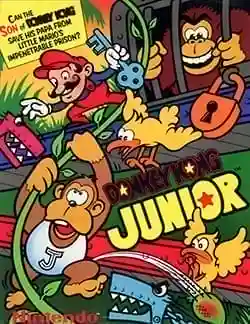
Donkey Kong Jr.
Arcade SystemsPlatform
Donkey Kong Jr. is a 1982 arcade action-platform game developed by Nintendo R&D1 and published by Nintendo. It reverses the premise of the original Donkey Kong: the player controls Donkey Kong Jr. as he tries to rescue his captured father from Mario. The game combines climbing, jumping, timing, and obstacle avoidance across four repeating stages. Its single-screen layouts are simple to understand but become demanding as enemies move faster and hazards multiply. The game was well received for its colorful presentation, responsive controls, and clever role reversal, and it remains notable as Mario’s only major arcade appearance as an antagonist.
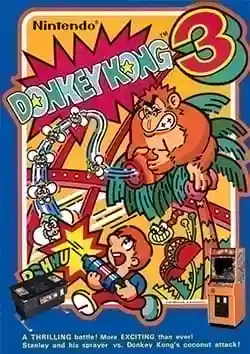
Donkey Kong 3
Arcade SystemsAction
Donkey Kong 3 is a 1983 fixed-screen action game developed by Nintendo R&D1 and published by Nintendo for arcade systems. Instead of controlling Mario, the player takes the role of Stanley, a greenhouse owner defending his plants from Donkey Kong and swarming insects. The game combines shooter-like aiming with short-range movement and quick defensive decisions. Each stage places Stanley below Donkey Kong, who must be driven upward while bees and other insects descend toward the flowers. Its distinctive premise and faster, more defensive play style made it a notable departure from the earlier Donkey Kong platform games. Reception was mixed compared with its predecessors, but the game remains recognized for its unusual arcade mechanics and for introducing Stanley as a playable Nintendo character.
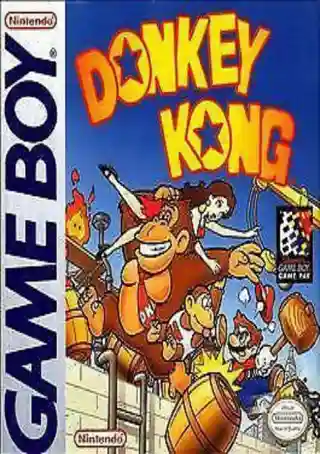
Donkey Kong
Game BoyPlatformer
Donkey Kong is a puzzle-platform game developed by Nintendo R&D1 and published by Nintendo for Game Boy. It begins like the classic arcade game, with Mario pursuing Donkey Kong to rescue Pauline, but develops into a much larger adventure after the opening stages. Each level combines traditional platforming with switches, moving platforms, ladders, ropes, hazards, and objects that Mario can carry or throw. Its compact monochrome presentation disguises considerable mechanical depth. The game was widely praised for its inventive level design, responsive controls, and successful adaptation of a familiar arcade property into an original handheld experience.
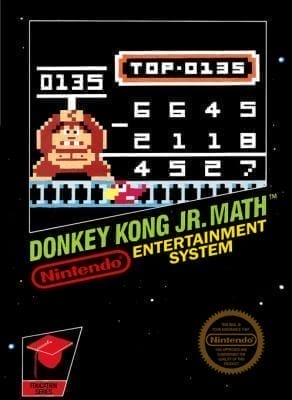
Donkey Kong Jr. Math
Nintendo Entertainment System (NES)Educational
Donkey Kong Jr. Math is an educational puzzle-platform game developed by Nintendo R&D1 and published by Nintendo for the Nintendo Entertainment System. It uses Donkey Kong Jr. as the player character, turning basic arithmetic into a series of climbing and collecting challenges. Players move through screens filled with numbered panels and mathematical symbols, then assemble equations that match a displayed target. Single-player and two-player options provide structured exercises and competitive play. Its unusual combination of licensed characters, platform movement, and schoolwork made it one of the NES library's more distinctive early experiments, although contemporary reception was generally modest.
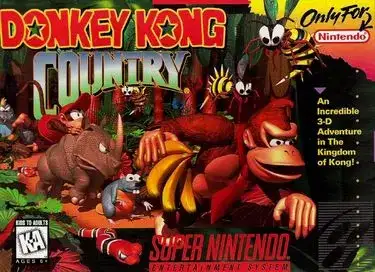
Donkey Kong Country
Super Nintendo (SNES)Platformer
Donkey Kong Country is a side-scrolling platform game developed by Rare and published by Nintendo for the Super Nintendo Entertainment System. It follows Donkey Kong and Diddy Kong as they recover their stolen banana hoard from the Kremlings, led by King K. Rool. The game combines precise jumping with running, rolling, barrel throwing, animal companions, and hidden bonus areas. Its pre-rendered visual style was technically striking for the SNES, while its varied stages and strong soundtrack received broad critical acclaim. The adventure supports solo play and a two-player mode in which players alternate or cooperate as the two Kongs.
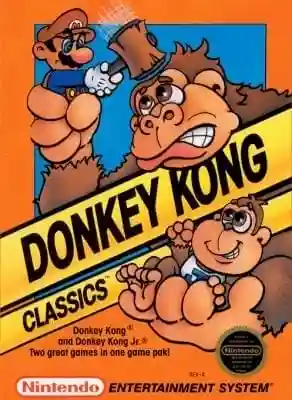
Donkey Kong Classics
Nintendo Entertainment System (NES)Arcade
Donkey Kong Classics is a Nintendo Entertainment System compilation developed by Nintendo R&D1 and published by Nintendo. It contains two foundational arcade-style platform games: Donkey Kong and Donkey Kong Jr. The first follows Mario as he climbs construction sites to rescue Pauline, while the second reverses the roles and casts Donkey Kong Jr. as the protagonist trying to free his captured father. Both games use compact, screen-based stages built around timing, ladders, hazards, and moving platforms. The compilation was received as a convenient NES package of historically important Nintendo arcade games, although its simple structure and limited content reflect their early-1980s origins.
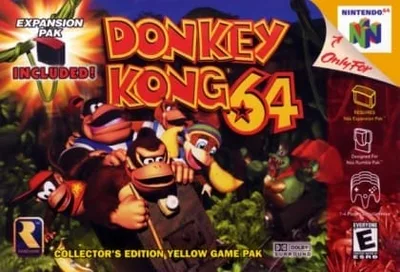
Donkey Kong 64
Nintendo 643D Platformer1999
Donkey Kong 64 is a 3D platformer developed by Rare and published by Nintendo for the Nintendo 64. King K. Rool has kidnapped Donkey Kong’s friends and stolen the island’s golden bananas, sending the Kong team on a large-scale rescue mission. The game combines exploration, platforming, combat, collectible hunting, minigames, and character-specific abilities. Players switch among five playable Kongs to open new routes and collect items that another Kong cannot reach. Its expansive worlds and large number of objectives received generally positive reviews, although some criticism focused on backtracking and the amount of collecting.
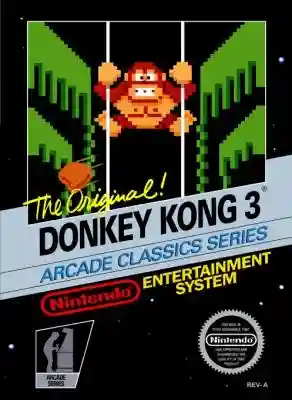
Donkey Kong 3
Nintendo Entertainment System (NES)Action
Donkey Kong 3 is a fixed-screen action shooter developed by Nintendo R&D1 and published by Nintendo for the Nintendo Entertainment System. The player controls Stanley, a greenhouse keeper defending his plants from Donkey Kong and swarms of insects. Rather than jumping across platforms, Stanley uses an insecticide spray to force enemies upward and clear each stage. The game is structured around repeated single-screen rounds, with increasing enemy pressure and changing insect formations. Its quick aiming, limited space, and escalating pace make it closer to an arcade score attack than a conventional platform game. Reception has generally focused on its unusual departure from earlier Donkey Kong games, responsive controls, and demanding difficulty, while some players find its repetitive format less substantial than the series' platforming entries.
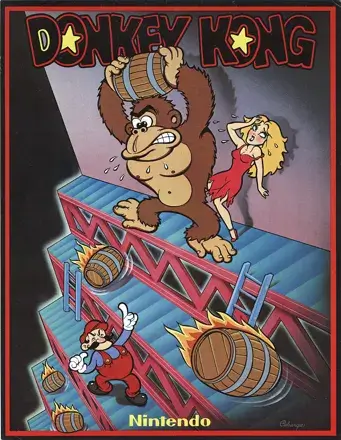
Donkey Kong
atari-2600Platform
Donkey Kong for the Atari 2600 is Coleco’s home-console adaptation of Nintendo’s 1981 arcade platform game. The player controls Mario, originally known as Jumpman, as he climbs construction-site structures to rescue Pauline from Donkey Kong. It combines fixed-screen platforming with timing-based obstacle avoidance, using ladders, platforms, rolling barrels, and other hazards. The conversion preserves the recognizable premise and basic arcade structure, although its simplified graphics, sound, and reduced presentation were widely considered weaker than the arcade original. It remains historically notable as one of the earliest major console versions of a Nintendo arcade hit and as an important early Atari 2600 platform game.
How is this list kept current?
How rankings are calculated
The list is generated from active EmuGamers catalog entries. Votes and play activity determine order; browser compatibility is reported separately and does not turn an untested game into a higher-ranked recommendation.
| Order | Signal | How it is used |
|---|---|---|
| 1 | Real community votes | Games with at least one recorded vote appear before games with no votes. |
| 2 | Rating confidence | More votes rank first, followed by the rating value. |
| 3 | Play activity | Play count breaks rating ties and orders entries with no votes. |
| 4 | Stable tie-break | Game name keeps otherwise equal results deterministic. |
Which sources support further research?
Official sources and catalog provenance
The ranked games come from the EmuGamers database. The links below are related official project updates used for emulator support and preservation context; they are not citations for the ranking order.