
Catalog activity ranking
Most-Played X-Men Games in the EmuGamers Catalog
This page uses active X-Men catalog entries and separates popularity signals from compatibility evidence. This activity ranking links directly to 10 catalog entries in the X-Men collection.
What is the quick answer?
X-Men: Children of the Atom currently appears first in this activity ranking, followed by X-Men: Mojo World and X-Men: The Official Game. Games with real community ratings are considered first; entries without votes are ordered by play activity. This is a catalog signal, not an independent editorial review.
Most-played X-Men games
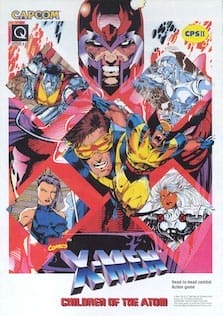
X-Men: Children of the Atom
Arcade SystemsFighting
X-Men: Children of the Atom is a 1994 arcade fighting game developed and published by Capcom. It adapts the Marvel Comics X-Men universe into a one-on-one fighter built around large character sprites, aerial movement, special attacks, and dramatic super moves. Players choose from X-Men and major antagonists, then battle through a sequence of opponents before facing the final boss. The game was notable for bringing Capcom's fast, combo-focused fighting design to the X-Men license and for establishing ideas later expanded in Capcom's Marvel crossover games. Its colorful presentation and active air combat earned it a strong reputation among arcade fighting-game fans.
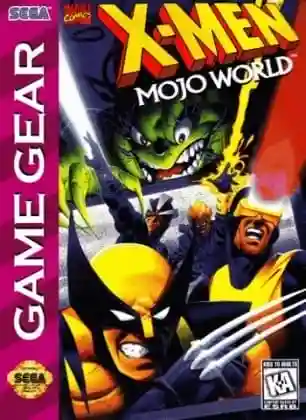
X-Men: Mojo World
game-gearPlatformer
X-Men: Mojo World is a side-scrolling action platformer developed by Eurocom and published by Sega for the Game Gear. It is based on Marvel's X-Men and centers on the team being drawn into the dangerous dimension controlled by Mojo. Players select an X-Man and fight through stages filled with enemies, hazards, platforms, and boss encounters. The roster gives the game some variety because each hero approaches combat differently. Its portable presentation uses colorful comic-book imagery and compact levels suited to the Game Gear's screen. Contemporary coverage generally treated it as a competent but technically limited handheld action game, with its character selection and licensed setting providing much of its appeal.
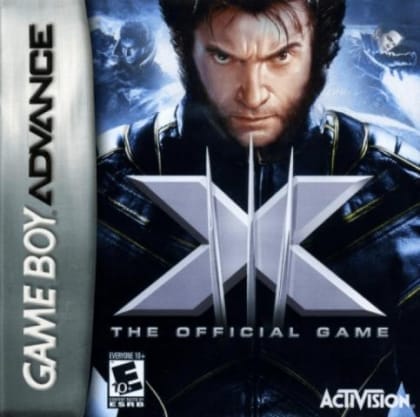
X-Men: The Official Game
Game Boy AdvanceAction
X-Men: The Official Game is a 2006 action platformer for Game Boy Advance, developed by WayForward Technologies and published by Activision. It presents an original side-scrolling adventure connected to the film continuity, following Wolverine, Nightcrawler, and Iceman as they investigate threats surrounding the X-Men. Each hero has a different movement and combat style, giving the campaign some variety despite its straightforward level structure. The game is designed for short stages with frequent fights, traversal challenges, and boss encounters. Reception was mixed: reviewers generally appreciated the character variety and accessible action, while criticizing the repetitive combat, limited depth, and modest presentation compared with larger console versions.
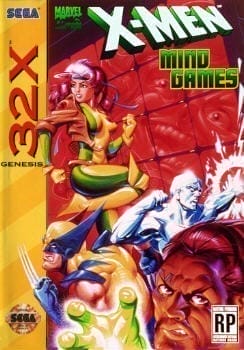
X-Men
Sega 32XAction1994
X-Men is an unreleased Sega 32X action game developed by Scavenger and planned for publication by Sega. It is associated with the X-Men superhero license and is generally described as a side-scrolling beat 'em up rather than a completed commercial release. The project appears in prototype and cancellation records, so its final premise, content, and intended play style were never formally settled. Because Sega 32X X-Men material represents an unfinished project, there is no verified retail release date or conventional critical reception. Surviving information is useful for documenting the platform's development history, but it should not be treated as evidence of a complete game.
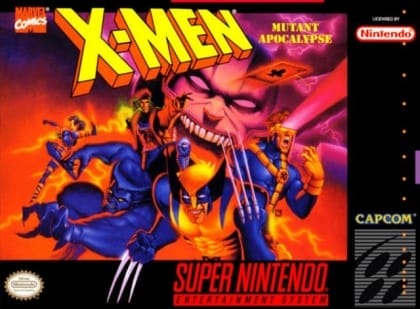
X-Men: Mutant Apocalypse
Super Nintendo (SNES)Action
X-Men: Mutant Apocalypse is a 1994 Super Nintendo action platformer developed and published by Capcom. It adapts the X-Men comic-book setting into a sequence of combat-focused stages in which five heroes confront threats connected to Apocalypse and his forces. Cyclops, Wolverine, Gambit, Beast, and Psylocke each have different attacks, movement options, and special abilities, giving the game a character-specific play style rather than a single uniform moveset. Stages can be approached through a selectable mission structure, and success depends on learning enemy patterns, using each mutant's strengths, and surviving demanding boss encounters. Contemporary reception generally praised its graphics, animation, controls, and varied playable characters, while some reviewers considered its difficulty and limited length challenging.
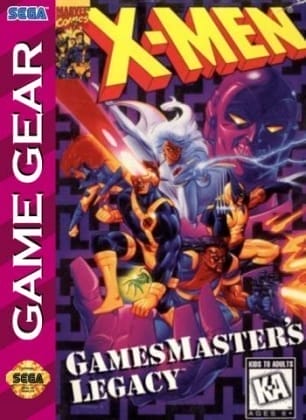
X-Men: Gamemaster's Legacy
game-gearAction
X-Men: Gamemaster's Legacy is a side-scrolling action platformer developed by Western Technologies and published by Sega for the Game Gear in 1995. It uses Marvel's X-Men license for a mission-driven adventure in which mutant heroes confront threats connected to the Gamemaster. The game emphasizes direct combat, platform navigation, and the distinct abilities of selectable X-Men rather than exploration or role-playing systems. Its compact stages, character switching, and portable presentation reflect the design priorities of late-generation Game Gear action games. Reception has generally been mixed: the licensed roster and variety of powers are appealing, while the controls, collision behavior, and difficulty can feel uneven. It is best approached as a straightforward handheld superhero platformer rather than a deep adaptation of the comic books.
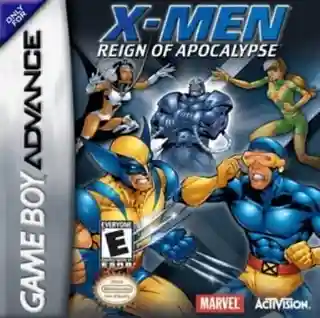
X-Men: Reign of Apocalypse
Game Boy AdvanceBeat 'em up
X-Men: Reign of Apocalypse is a side-scrolling action beat 'em up developed by Digital Eclipse and published by Activision for the Game Boy Advance. It places the X-Men in an alternate reality ruled by Apocalypse, where familiar allies and enemies have been transformed by his regime. Players choose from four heroes—Cyclops, Wolverine, Storm, or Rogue—and fight through compact stages using standard attacks, jumps, and character-specific abilities. The game focuses on direct arcade-style combat rather than exploration or role-playing systems. Contemporary reception was mixed: reviewers generally recognized its solid presentation and recognizable X-Men cast, but criticized its short length, repetitive fighting, and limited depth compared with larger console beat 'em ups.
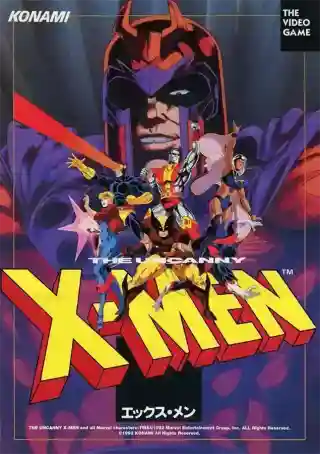
X-Men
Arcade SystemsBeat 'em up
X-Men is a side-scrolling beat 'em up developed and published by Konami for arcade systems in 1992. Based on Marvel's mutant superhero team, it follows the X-Men as they fight through stages to stop Magneto and his forces. Players choose from six heroes, each with distinct attacks and a mutant power, then battle waves of enemies in cooperative arcade action. The game supports up to six players on its larger cabinet configuration, an unusual feature for its period. Its colorful comic-book presentation, responsive combat, and energetic cooperative play earned it a strong reputation among arcade beat 'em ups and X-Men adaptations.
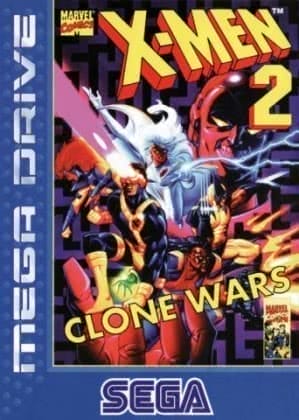
X-Men 2: Clone Wars
Sega GenesisAction
X-Men 2: Clone Wars is a side-scrolling action game developed by Headgames and published by Sega for the Genesis in 1995. It follows the X-Men as they investigate the Phalanx, a techno-organic threat that is producing dangerous clones and absorbing life-forms. The game combines platforming, melee combat, mutant powers, and shooting across compact, hazard-filled stages. Players can control several familiar heroes, each with distinct movement and attack abilities, while Magneto becomes available during the campaign. Its unusual opening, varied cast, and responsive character handling earned it a stronger reputation than many licensed superhero games of its era. The difficulty and occasionally awkward level layouts remain its main limitations.
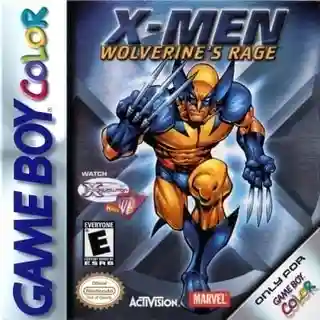
X-Men: Wolverine's Rage
Game BoyAction
X-Men: Wolverine's Rage is a side-scrolling action platformer developed by Digital Eclipse and published by Activision for the Game Boy Color. It places Wolverine in a compact adventure built around running, jumping, climbing, and close-range claw attacks. The game uses comic-book-inspired presentation and a straightforward level-to-level structure rather than a large exploration map. Wolverine battles through hostile environments while pursuing a dangerous mutant threat. Reception was mixed: reviewers generally recognized the character's abilities and solid presentation, but criticized the short length, repetitive combat, and occasional control or collision issues. It is chiefly remembered as a modest handheld adaptation of Wolverine's comic-book action.
How is this list kept current?
How rankings are calculated
The list is generated from active EmuGamers catalog entries. Votes and play activity determine order; browser compatibility is reported separately and does not turn an untested game into a higher-ranked recommendation.
| Order | Signal | How it is used |
|---|---|---|
| 1 | Real community votes | Games with at least one recorded vote appear before games with no votes. |
| 2 | Rating confidence | More votes rank first, followed by the rating value. |
| 3 | Play activity | Play count breaks rating ties and orders entries with no votes. |
| 4 | Stable tie-break | Game name keeps otherwise equal results deterministic. |
Which sources support further research?
Official sources and catalog provenance
The ranked games come from the EmuGamers database. The links below are related official project updates used for emulator support and preservation context; they are not citations for the ranking order.